A Little Farther

During the day, it is great to stand on a pier and stare down into the water, trying to catch a glimpse of a fish swimming by or testing how deep the eye can penetrate. At night, however, the water beneath turns into a dark, reflective surface that refuses to show anything below. I remember sitting on a pier in the dark with my brother during our yearly vacations. Occasionally, the surface would break without warning, probably due to predators chasing a school of fish, giving us a sudden jolt.

A pier is a simple structure, an extension of land into uncertain territory. A very human attempt to move a little farther. The vanguard of land advancing beyond the shoreline.

There is something almost magical in standing on a scaffold-like structure above the water. Almost like walking on its surface. While a boat submits to the instability of the water, a pier insists on being land, holding its ground in a gesture of resistance.

In Victorian Britain and beyond, piers that began as landing stages for steamships became places where people walked out over the sea simply to linger. Some extended for more than two kilometres, housing restaurants, theatres and fairground attractions.

Even with such elaborate construction, piers remain vulnerable. Built largely of wood and exposed to constant movement, storms and corrosion, many Victorian piers have disappeared. Even as they stand, they retain the character of temporary structures. Looking at Google Maps, I see that the little pier my brother and I used to sit on has now fallen into the sea.
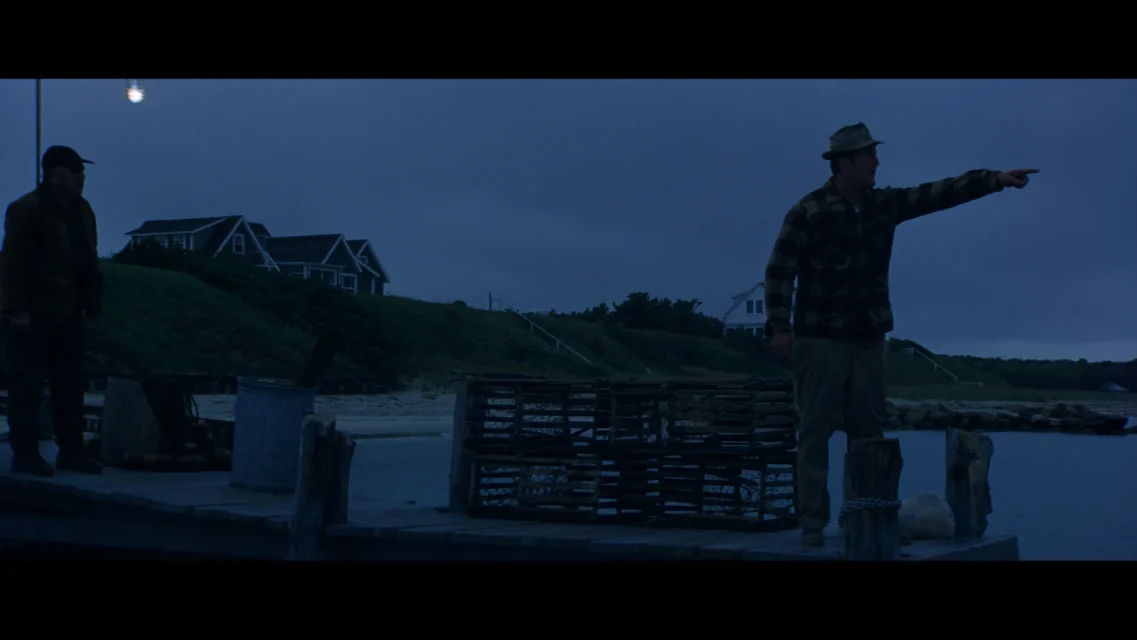
Jaws, pier scene at night, 1975
Jaws, pier scene at night, 1975.
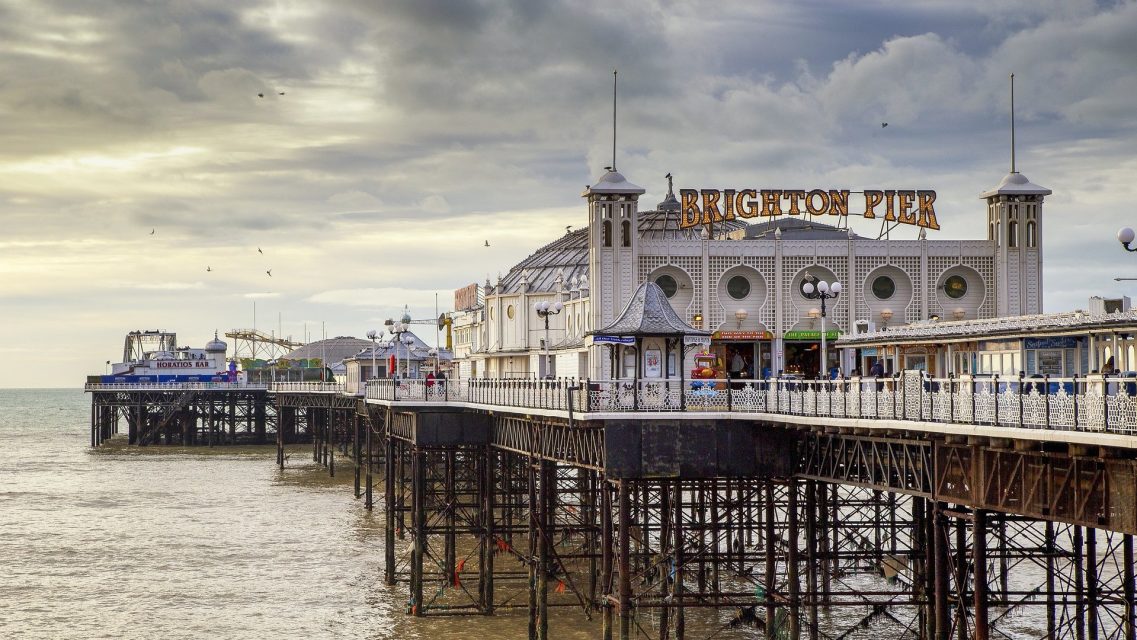
Brighton Palace Pier, Brighton
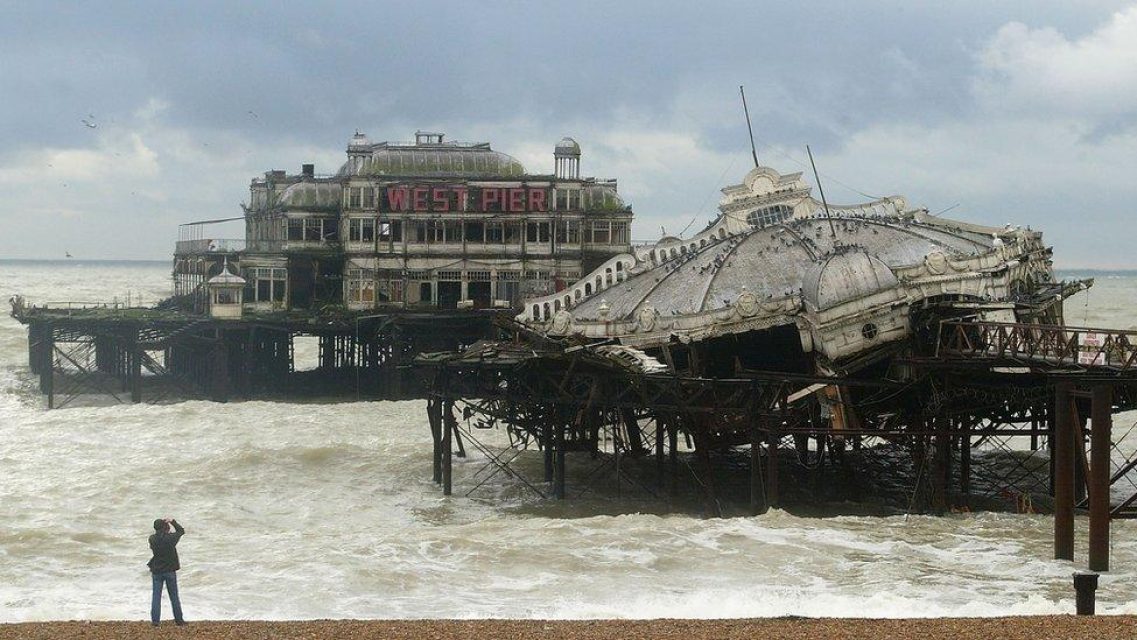
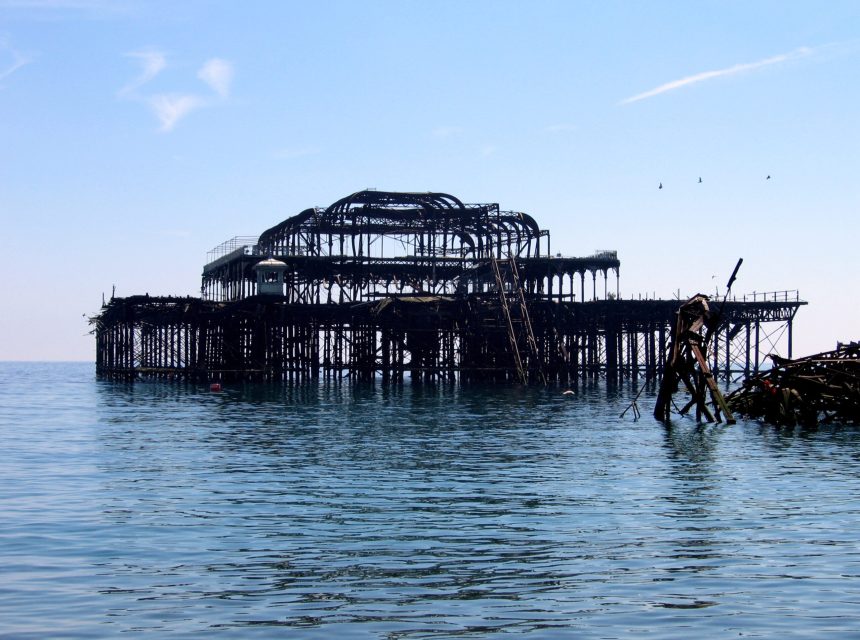
Brighton West Pier in its derelict state, Brighton, England
It was finally destroyed by a fire in 2003.
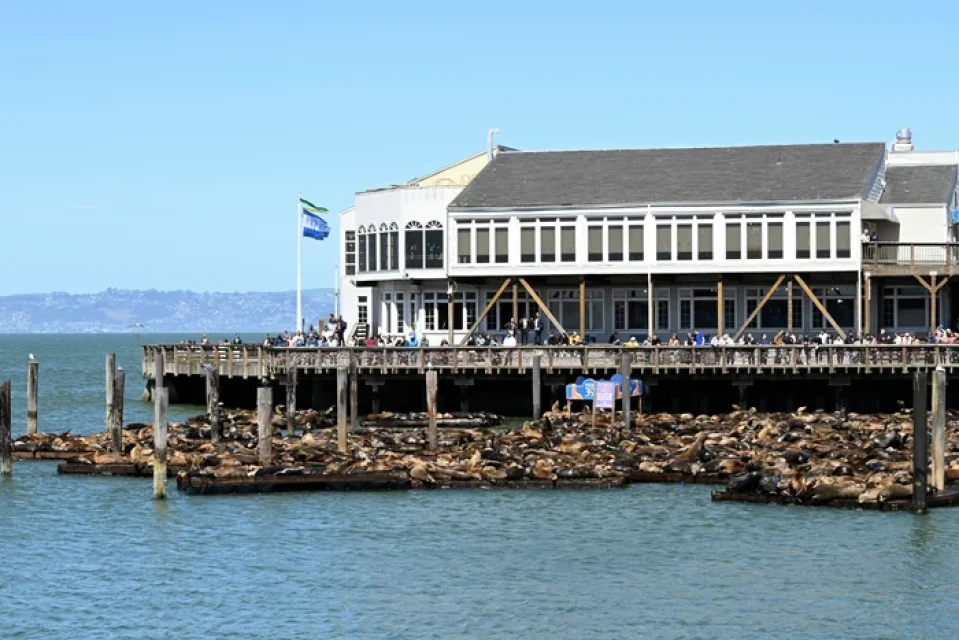
Pier 39, San Francisco
Pier 39, San Francisco.
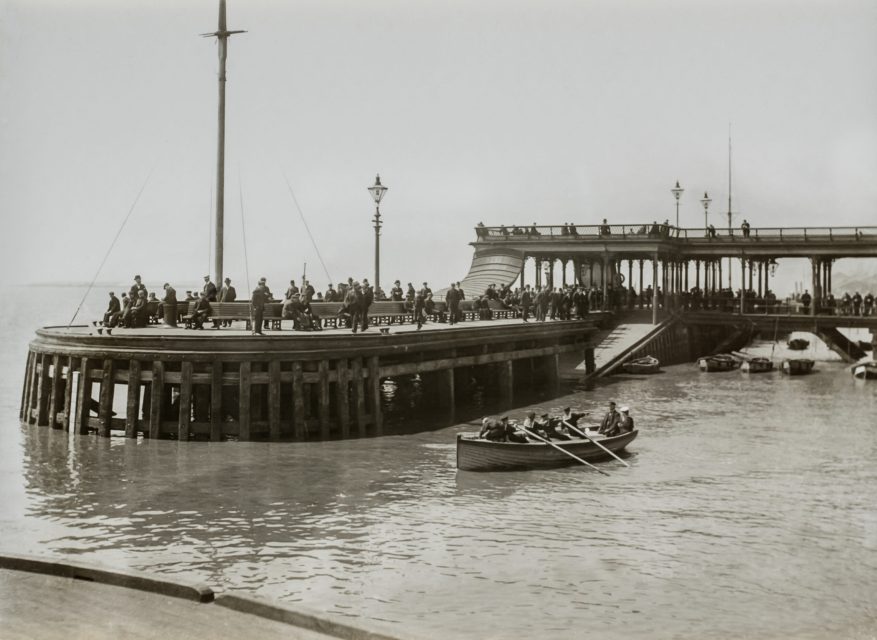
Victoria Pier, Colwyn Bay, Wales, early 20th century
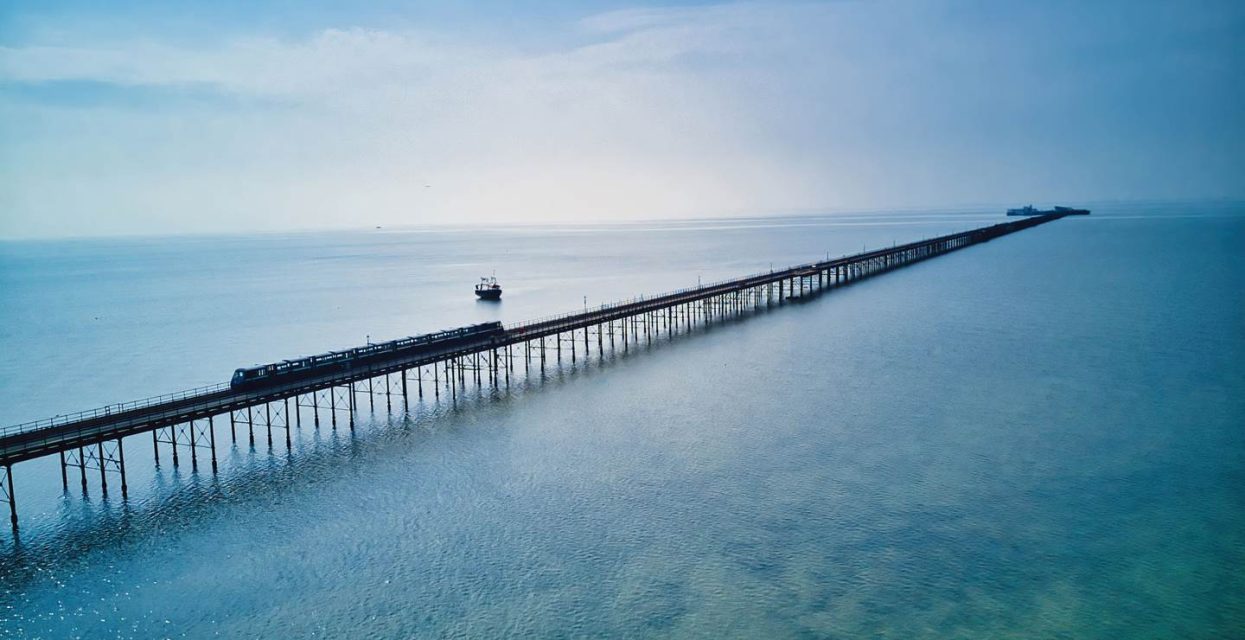
Southend Pier in Southend-on-Sea is approximately 2.16 kilometres long. A train takes visitors from the shore to the end of the pier.
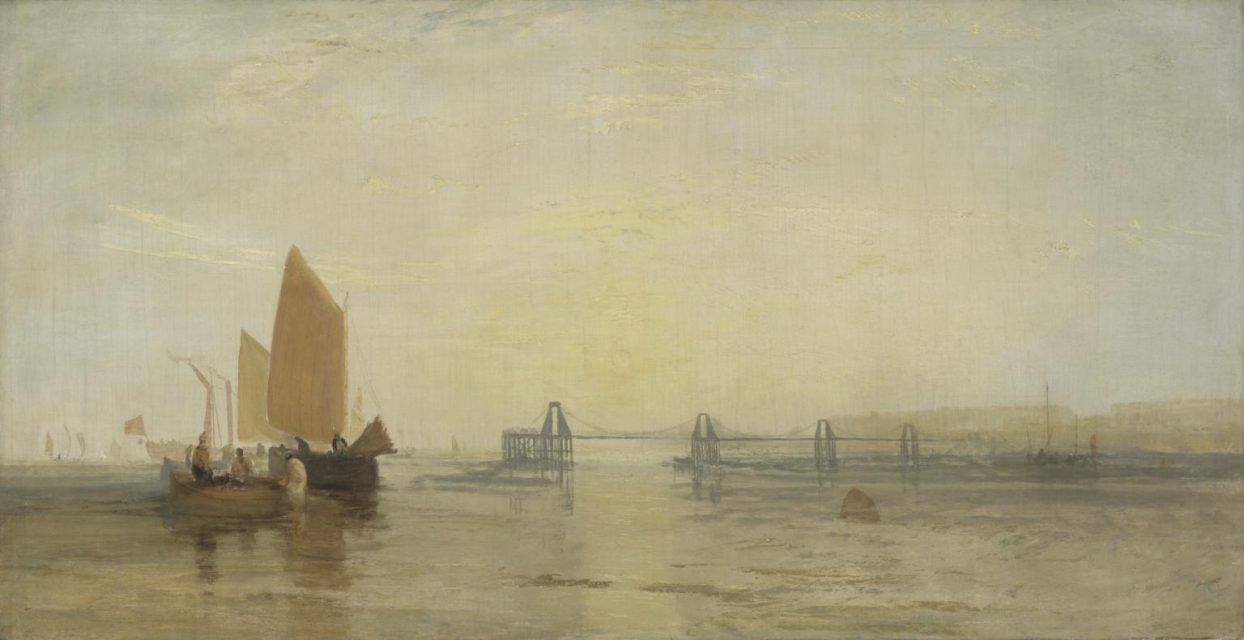
J. M. W. Turner, Brighton with Chain Pier, c. 1826
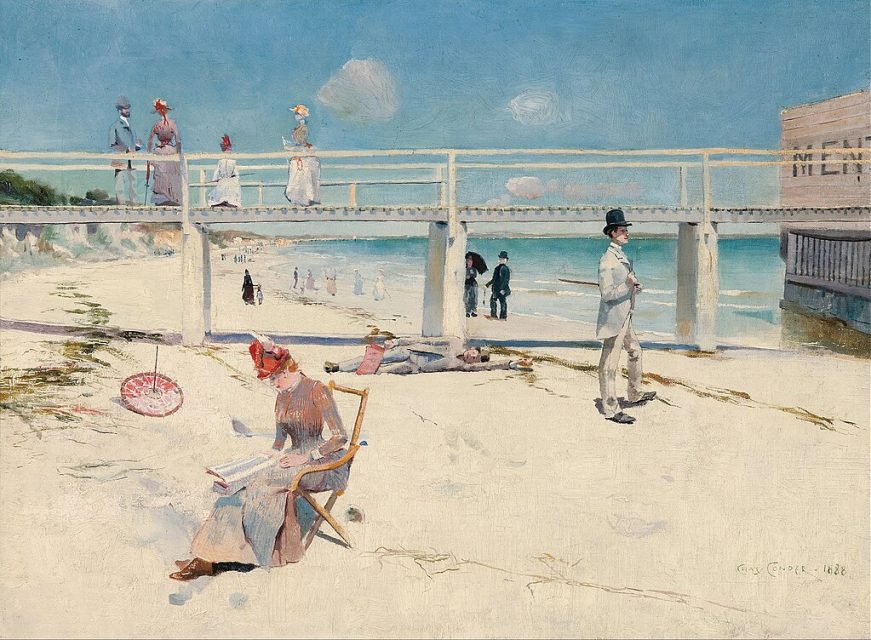
Charles Conder, Holiday at Mentone, 1888
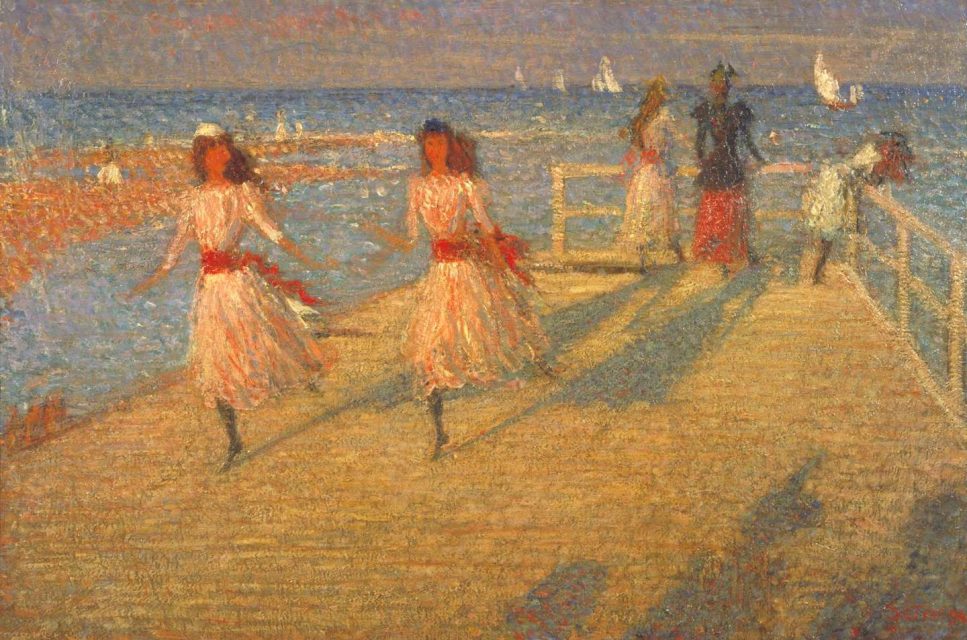
Philip Wilson Steer, Girls Running: Walberswick Pier, 1888–1894
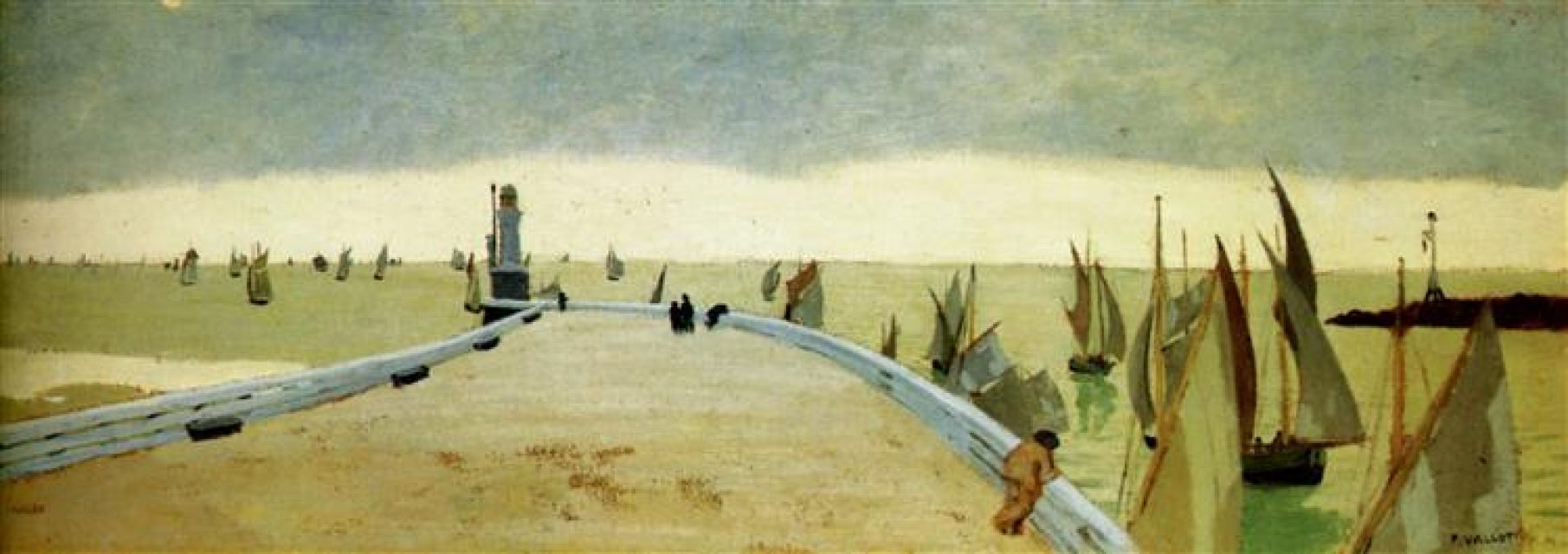
Félix Vallotton, The Pier at Honfleur, 1901
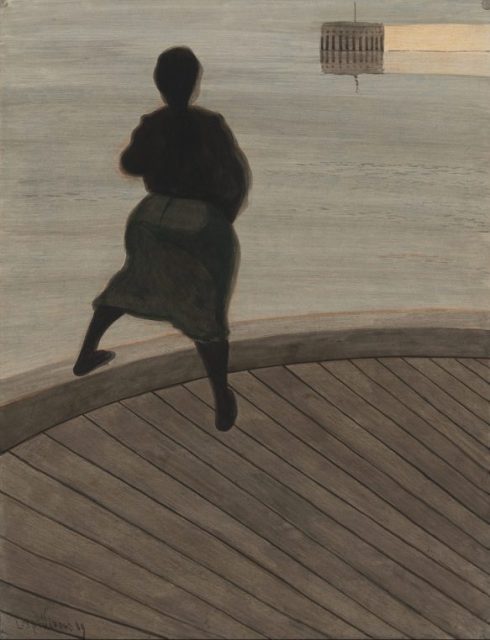
Léon Spilliaert, Fisherman’s Wife on the Jetty, c. 1907
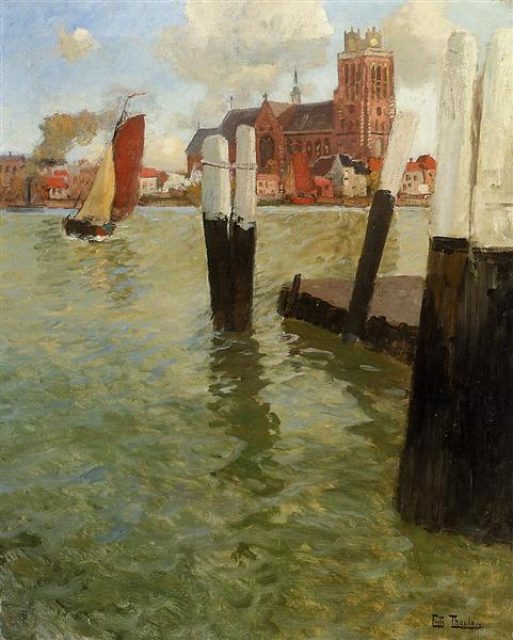
Frits Thaulow, The Pier at Dordrecht, 1884
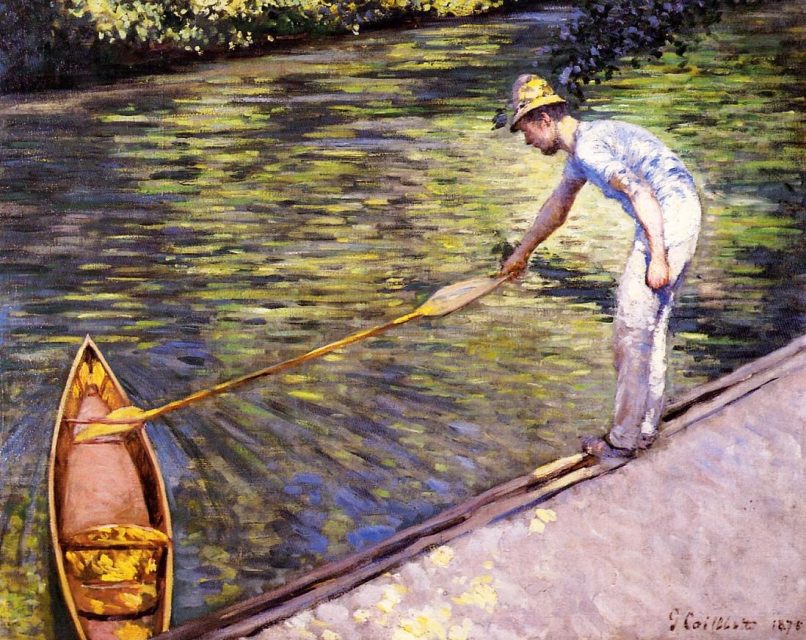
Boat and pier in Gustave Caillebotte’s Boater Pulling on His Perissoire, 1878
Boat and pier in Gustave Caillebotte’s Boater Pulling on His Perissoire, 1878.
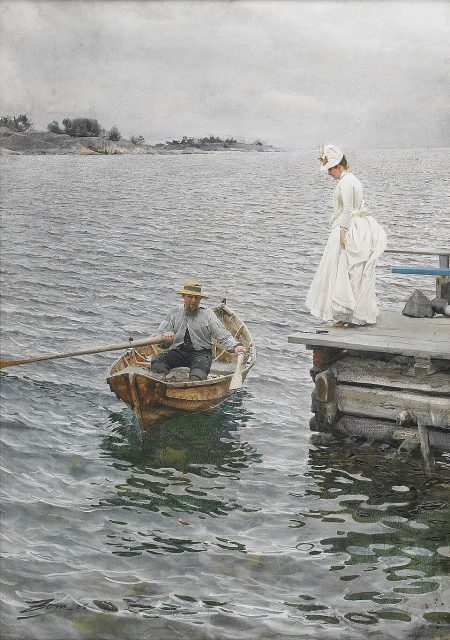
Anders Zorn’s Sommarnoje, 1886
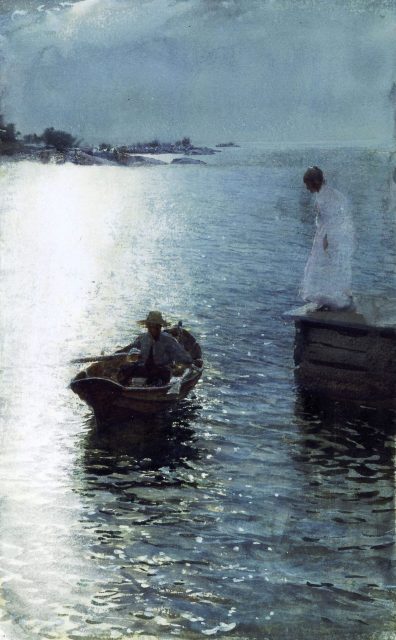
Anders Zorn, Sommarnoje, 1886 (nocturne)
There is a nocturnal version, too.
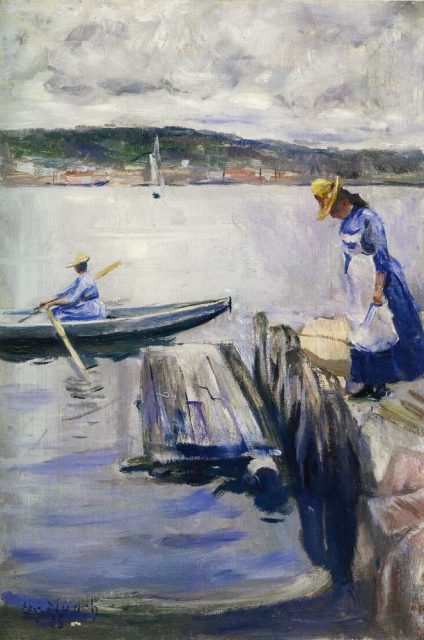
Edvard Munch, Summer Day on the Pier, c. 1888
Edvard Munch, Summer Day on the Pier, c. 1888.
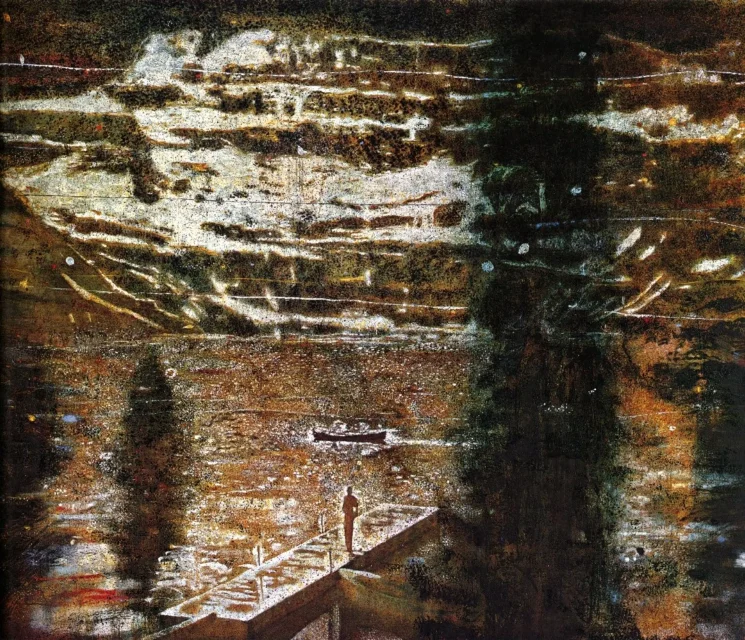
Peter Doig, Jetty, 1994
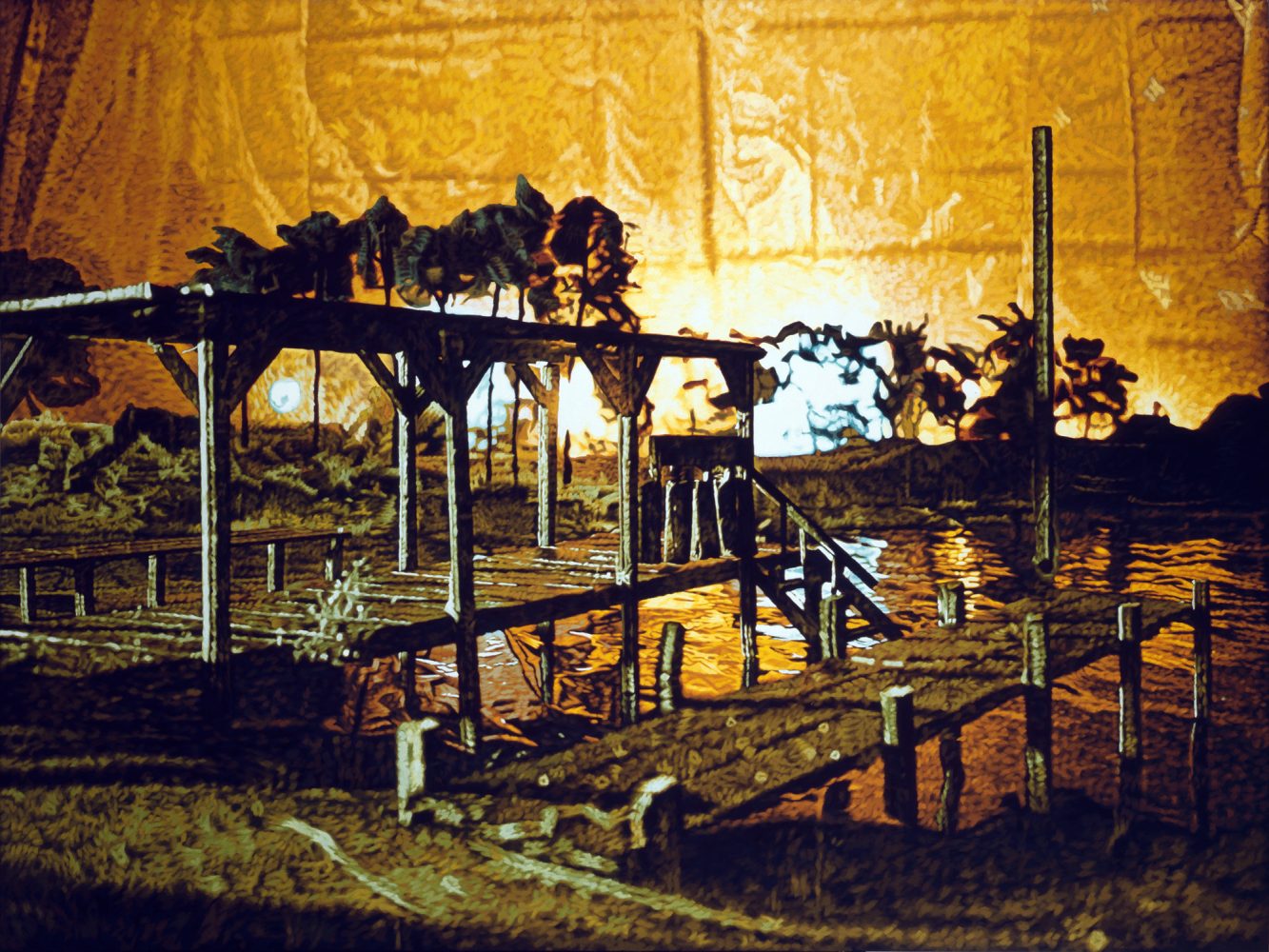
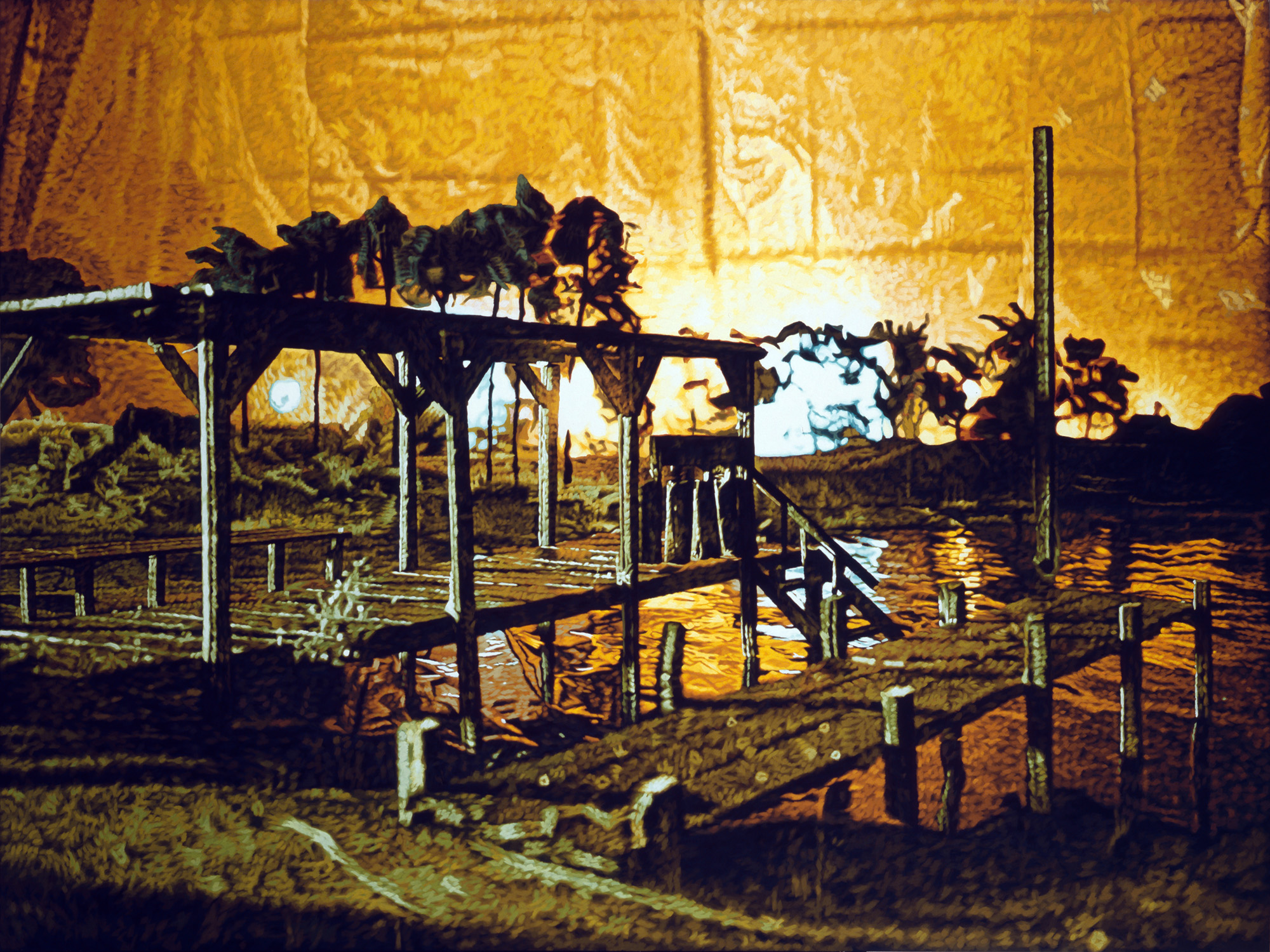
Philipp Fröhlich's painting (027L), 2006, tempera on canvas, 210 x 280 cm
(027L), 2006, tempera on canvas, 210 x 280 cm

Sign up to receive a brief update every two weeks when a painting is added.