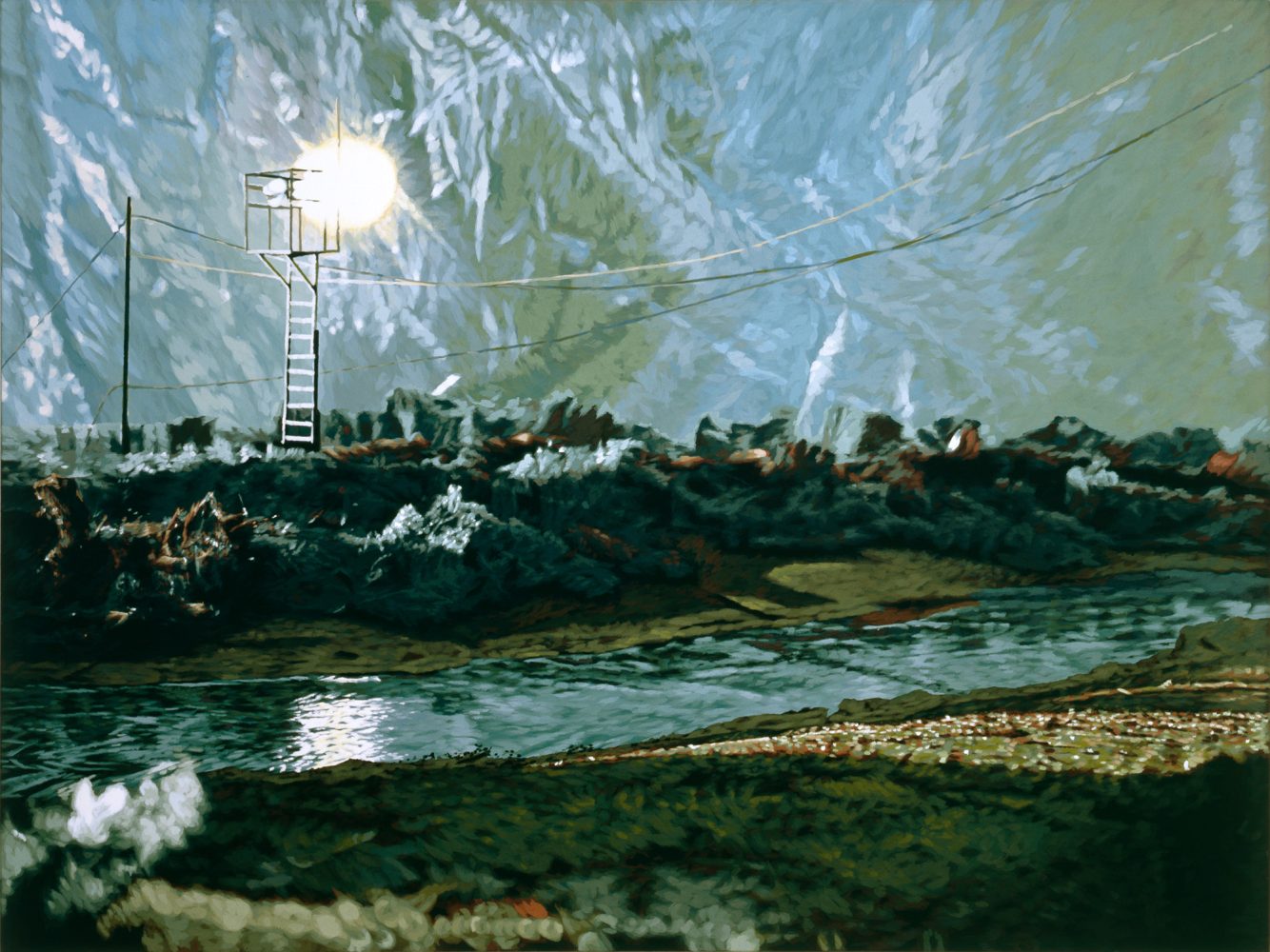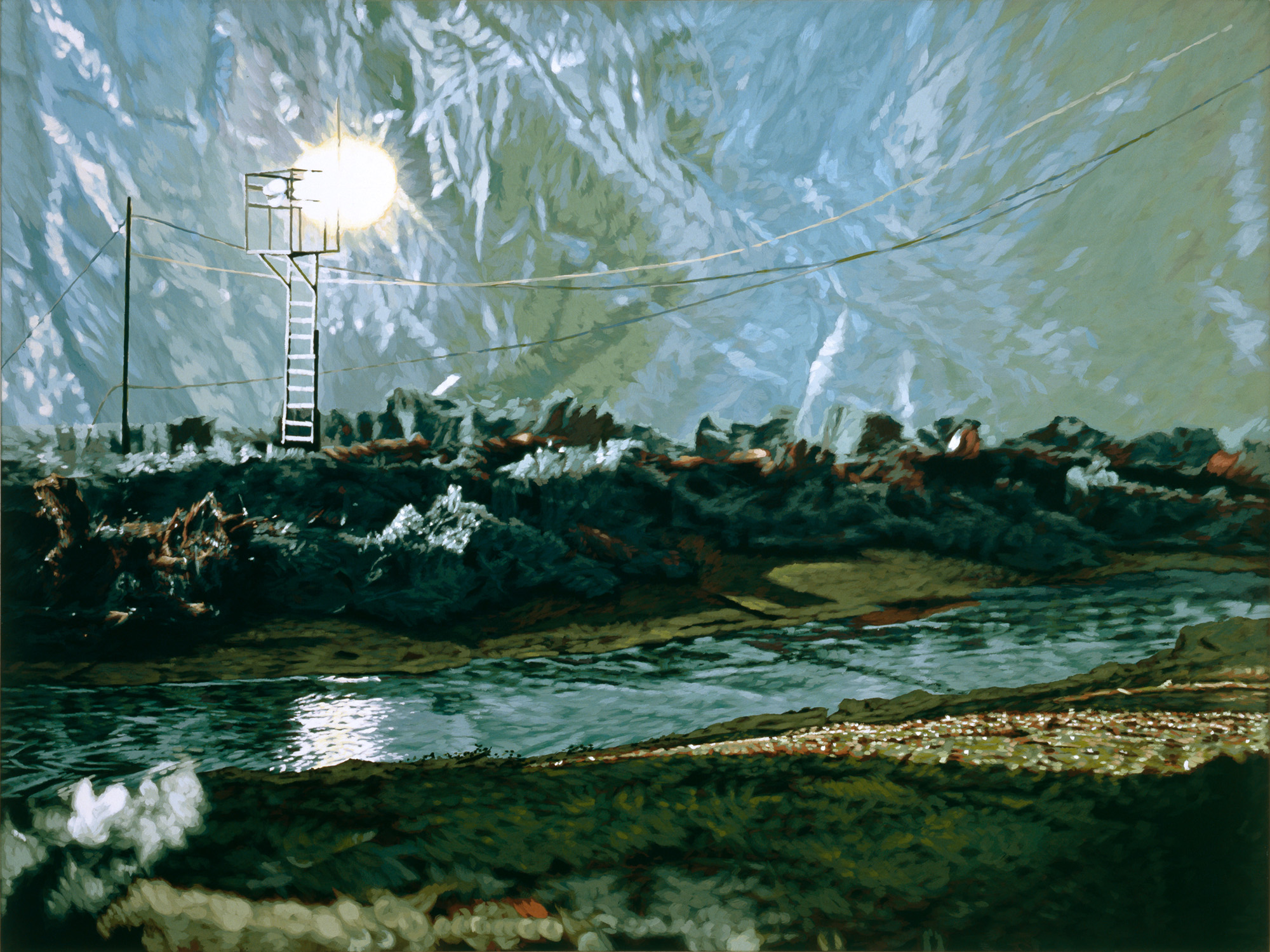
As a young child, in the early 1980s, we lived in the northern countryside of western Germany for a few years. It was not far from the GDR and a couple of times, my parents took my brothers and me for a little hike along the border.
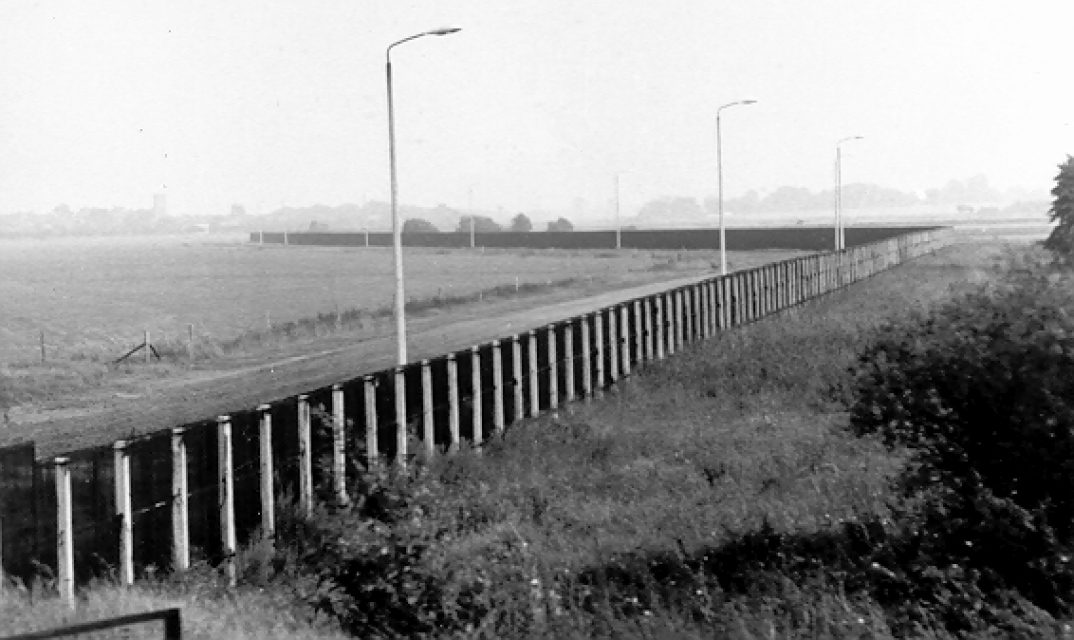
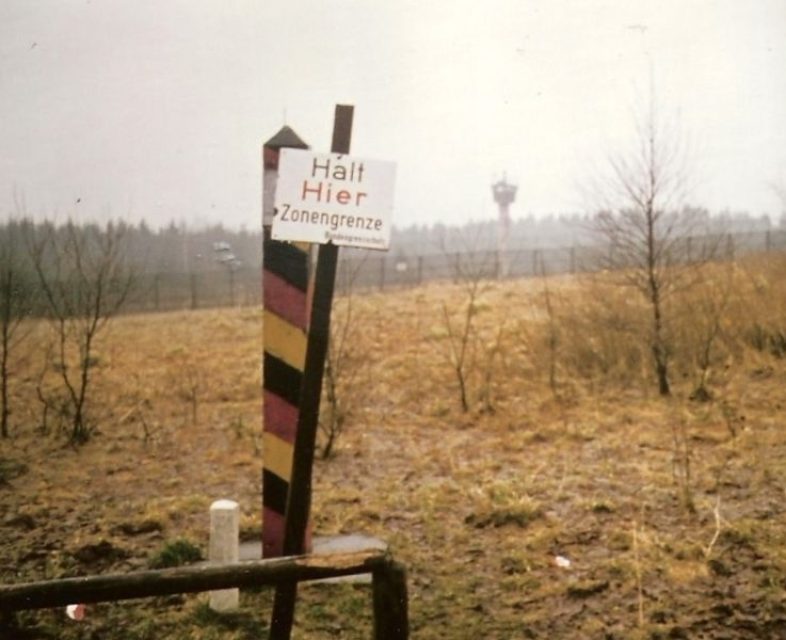
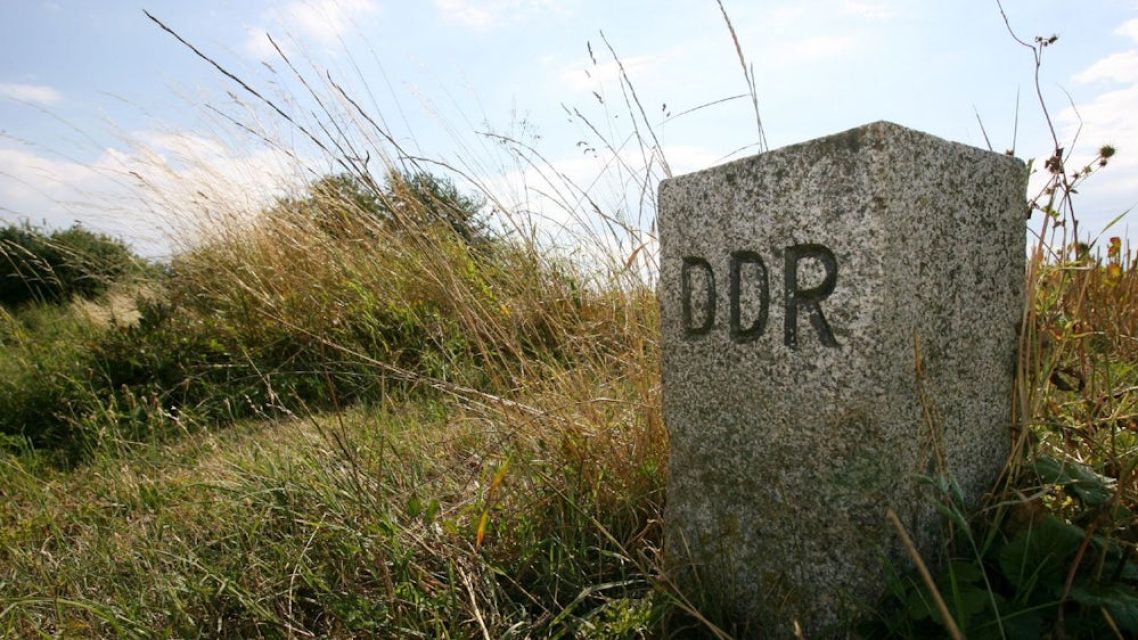
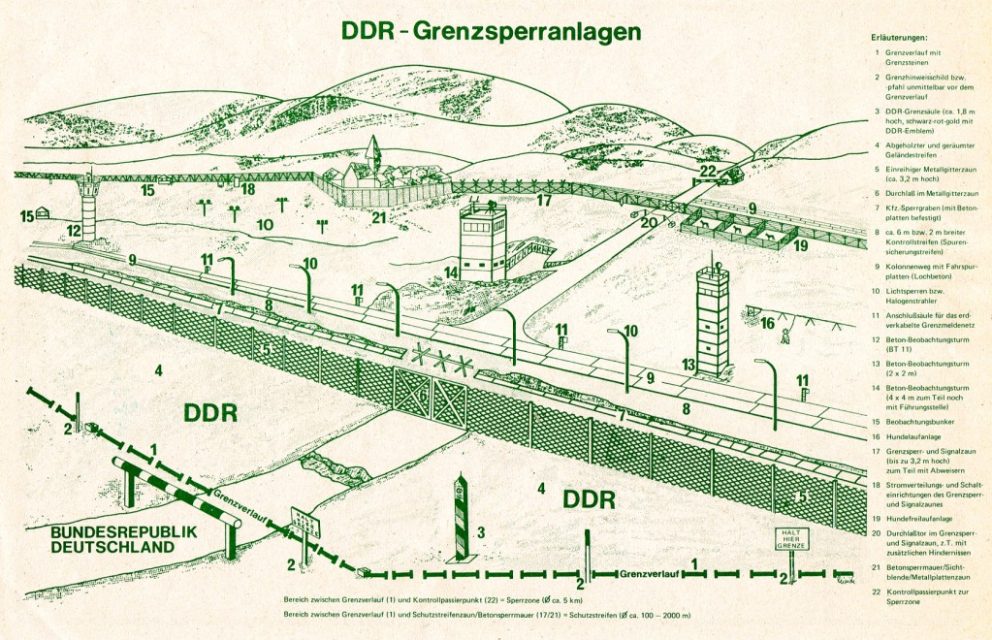
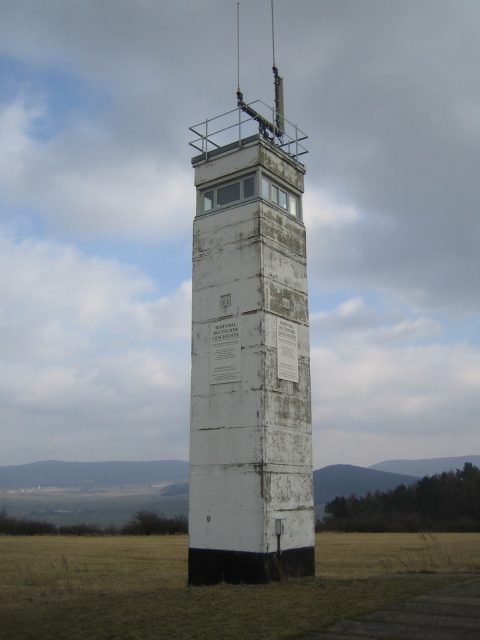
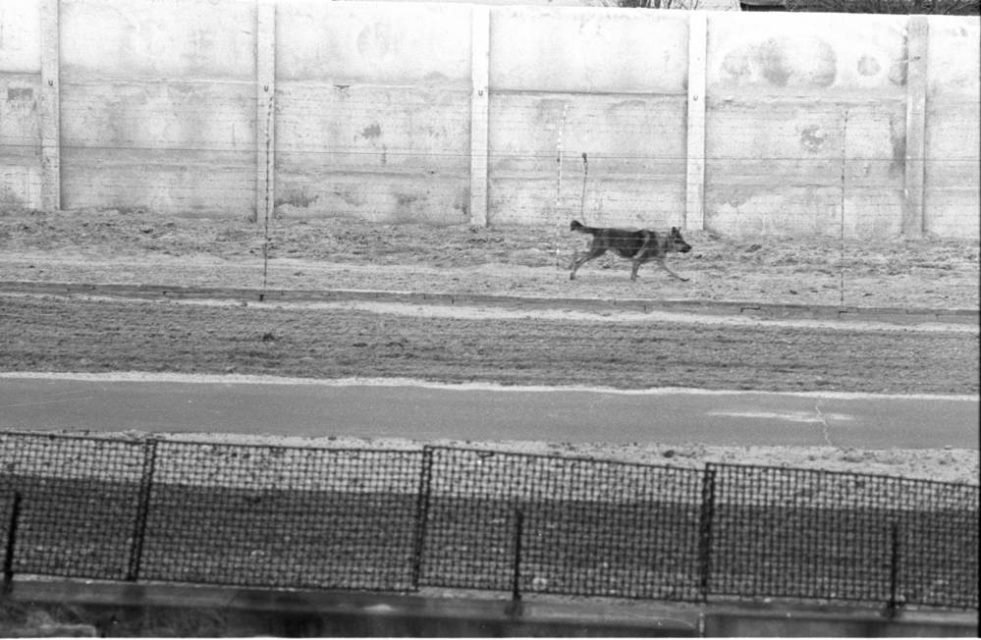
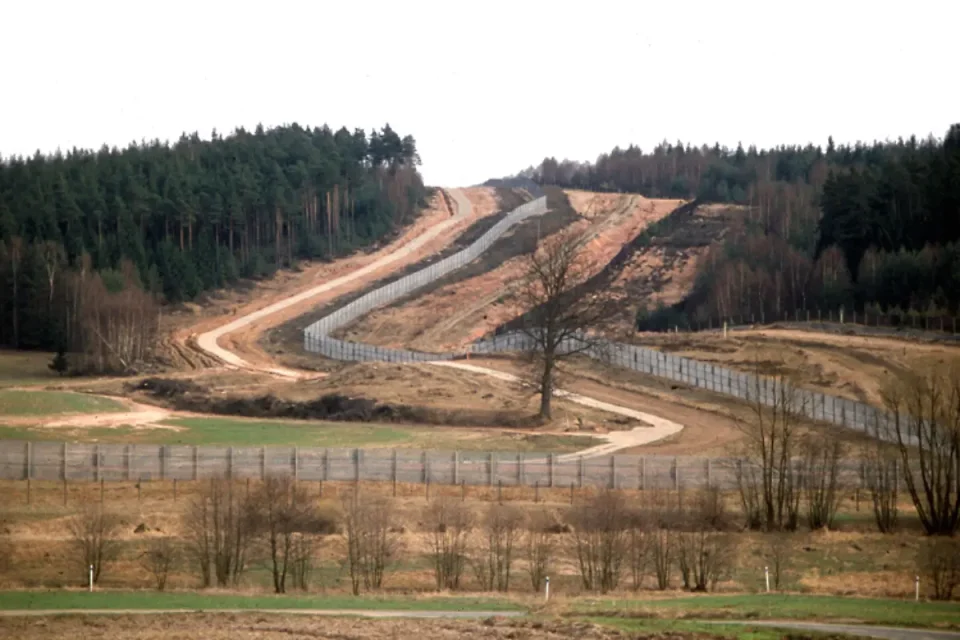
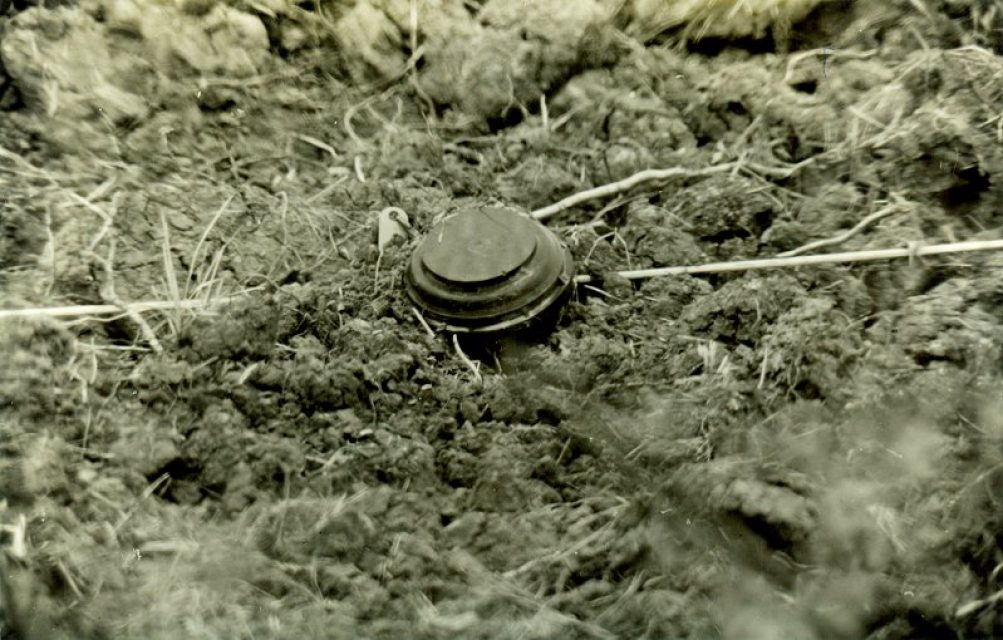
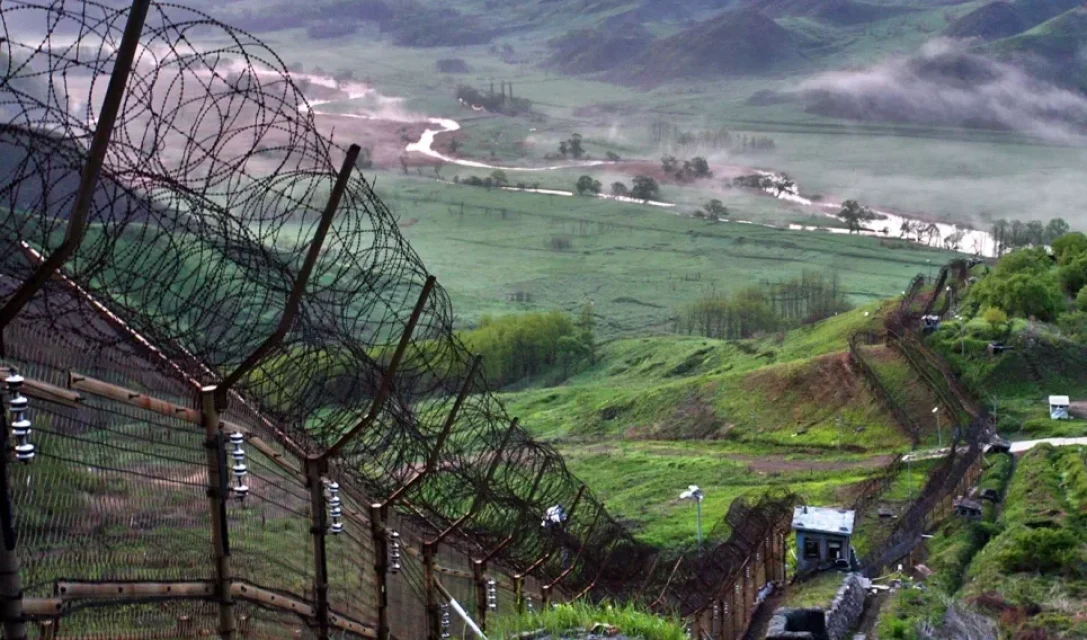
You could see the fences and watchtowers in the distance, with the infamous Todesstreifen (death strip) in between. But approaching out of the forest from the western side, the actual border was marked by simple border stones and lay maybe fifty meters before the fence, in a cleared area.
I still remember my father taking a couple of steps over the border into GDR territory. Nothing happened.
The border itself was so banal that it felt totally absurd to me as a child. The fences and watchtowers on the other hand were coldly functional and menacing.
Looking back, I’m struck by how often borders appear in my paintings. For years, I wasn’t even aware they were a recurring theme.
Borders come naturally to painters.
Borders can be aimed outward for protection or inward for containment of one’s own people, like the GDR border. They can become repositories for identity, danger, longing, fear or hope. They rarely mean the same thing on both sides.