Escalators

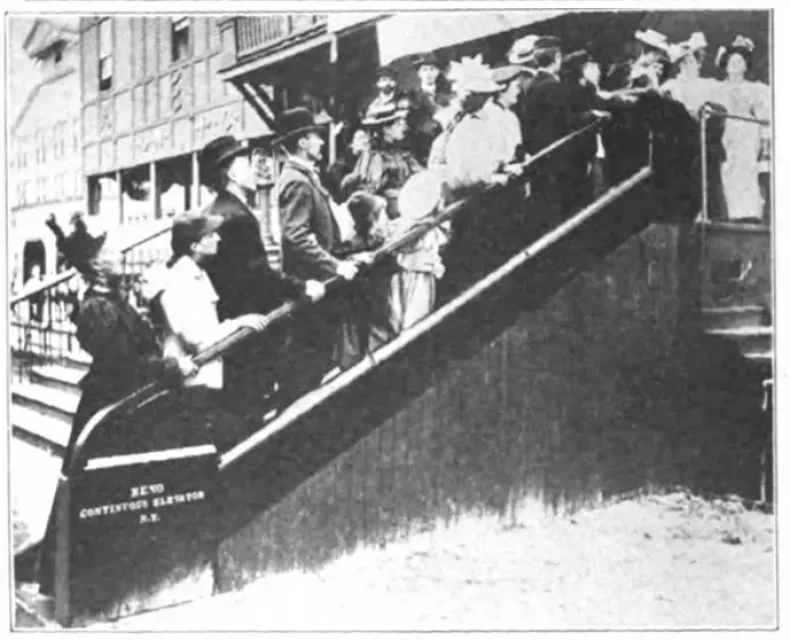
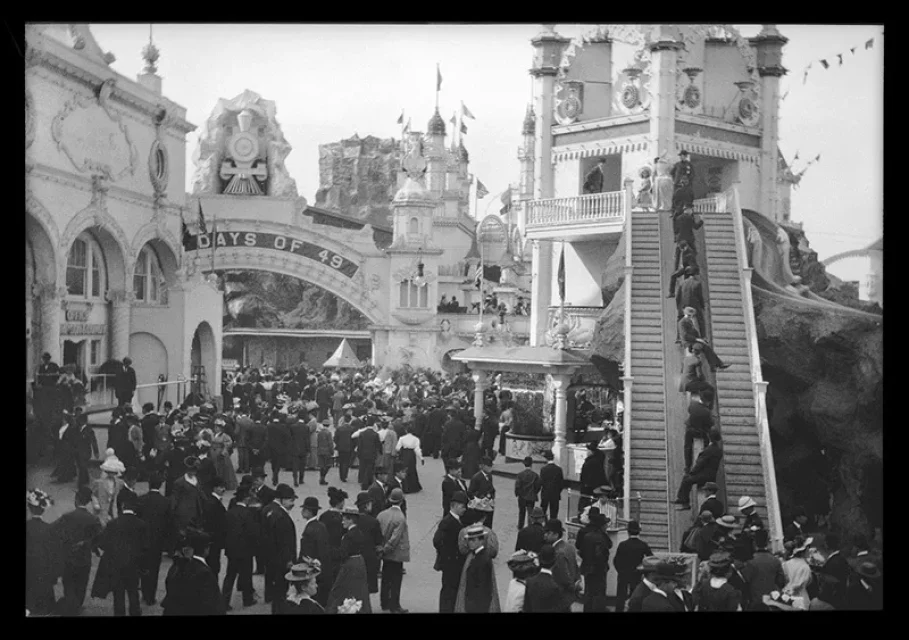
The first escalator was installed as an attraction at Coney Island. It resembled a diagonally moving belt rather than the horizontal steps we are familiar with today. Yet within a few years, its architectural and commercial potential became apparent.

Stairs require effort and bodily awareness. They are built for individual rhythm and speed, and the climber has the possibility of pause and reversal. Elevators, on the other hand, require a waiting interval before enclosing the voyagers in a sudden vertical displacement. They cut the architecture into floors where you can emerge and disappear, just to reappear somewhere else.

Escalators offer the possibility of continuous movement. They usually require no waiting and provide open visibility of the climb through the floors. There is something democratic in the fixed, metronomic rhythm and collective glide they offer, without interruption once stepped on.

Maintaining the vertical standing posture, with steps regulating the spaces between bodies, the diagonally upward or downward procession looks mildly absurd. Yet even though we have taken thousands of escalators in our lives, they still retain something of the childhood excitement they originally provoked.

But rather than merely reducing the effort of climbing stairs, escalators are an effective means of guiding and directing crowds. They can be used to funnel people toward exits, as in subway stations, or steer them toward consumption zones in department stores.

The size, number, and speed of escalators in a given space precisely determine capacity and flow. A single escalator can carry between 3,000 and 10,000 people per hour, making it an efficient instrument for maintaining a controlled volume.

And when an escalator fails, it is still usable as a staircase.
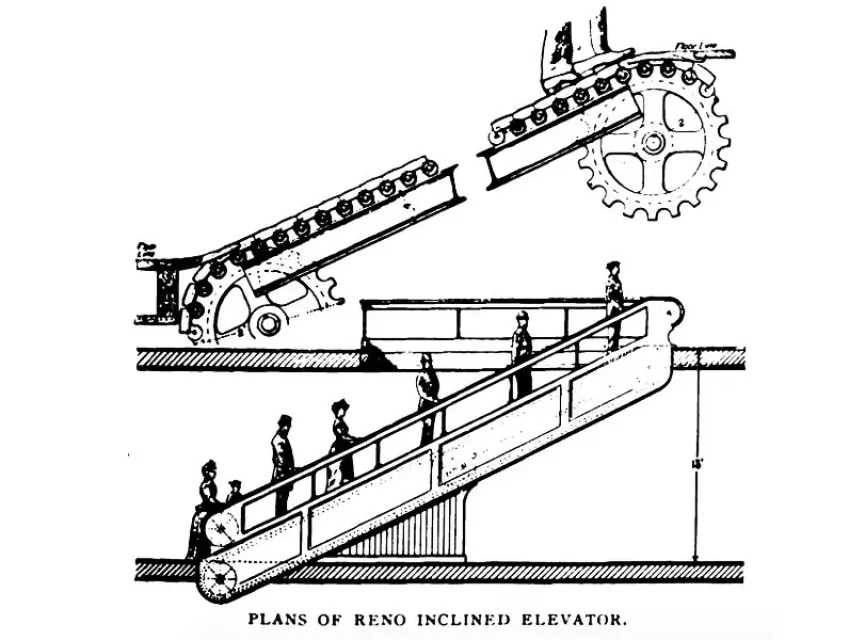
Jesse W. Reno’s “Inclined Elevator,” patented in 1892 and installed at Coney Island in 1896.
Jesse W. Reno’s Inclined Elevator at Coney Island, 1896.
This later model at Coney Island allowed visitors to sit while ascending.
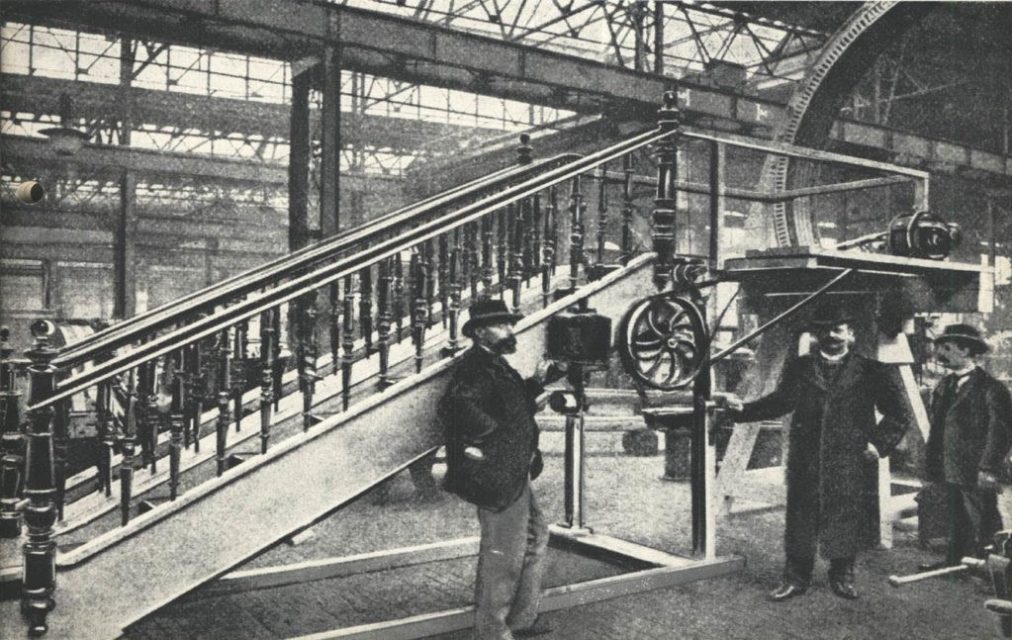
An early Otis escalator prototype photographed in the Otis factory, late 1890s.
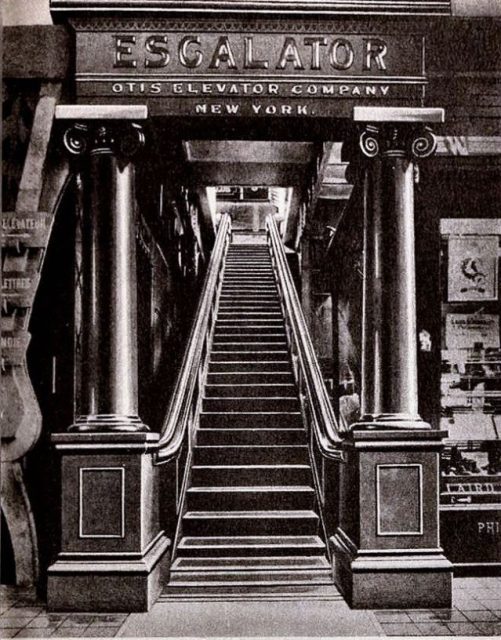
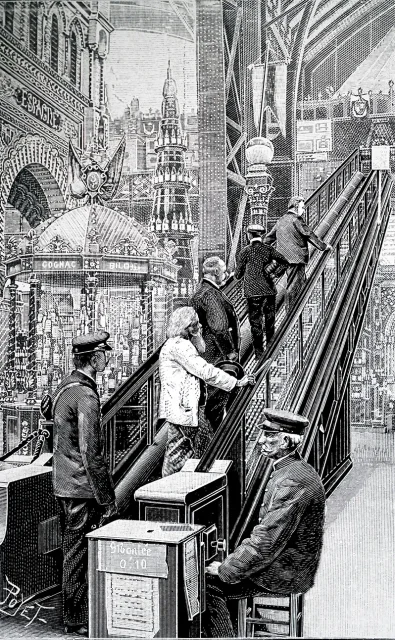
Otis escalators at the Exposition Universelle, Paris, 1900.
Engraving of the escalator installation at the Exposition Universelle, Paris, 1900.
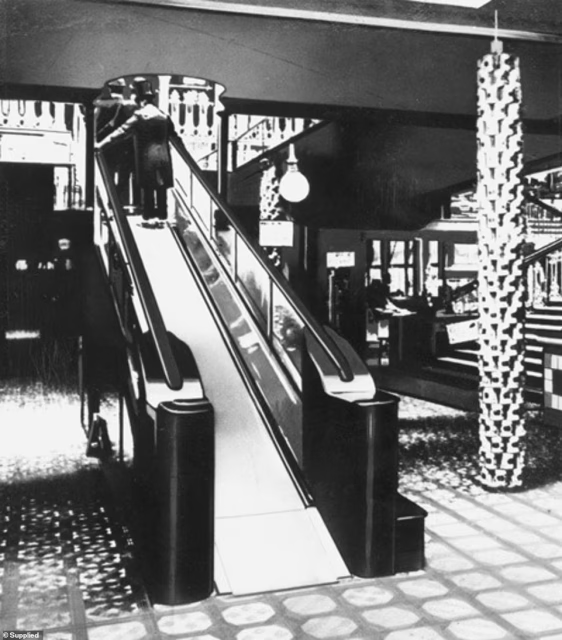
Early escalator installation at Harrods department store, London.
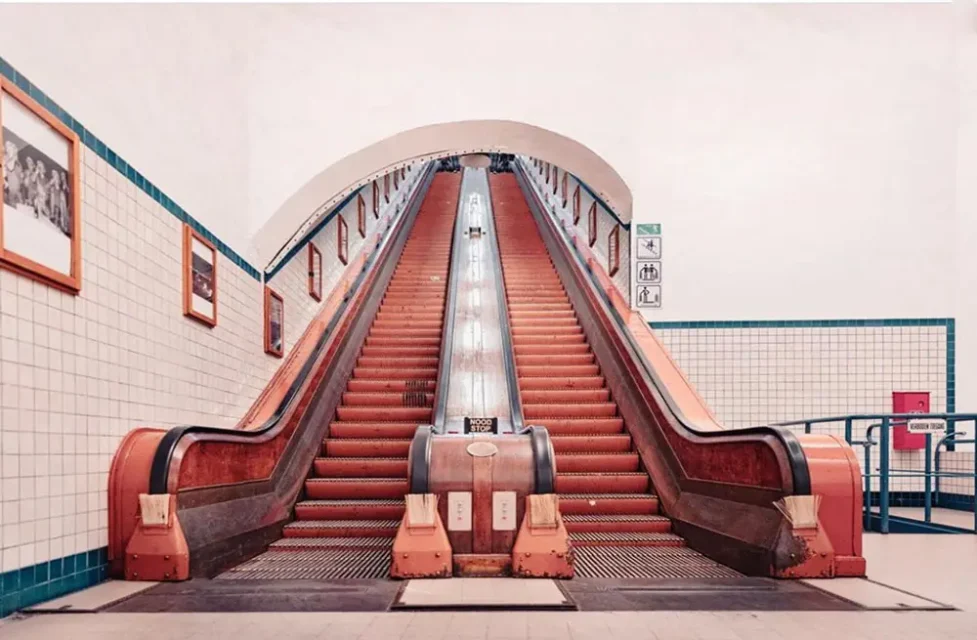
Original wooden escalators in the St. Anna tunnel, Antwerp, 1933. Still in operation and among the last of their kind.
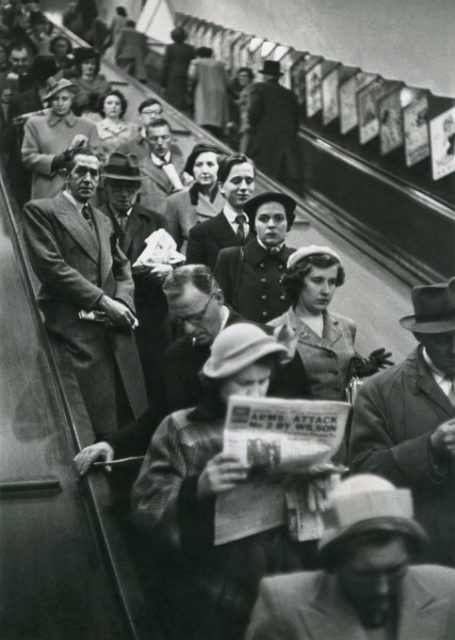
Henri Cartier-Bresson, Escalator, mid-20th century.
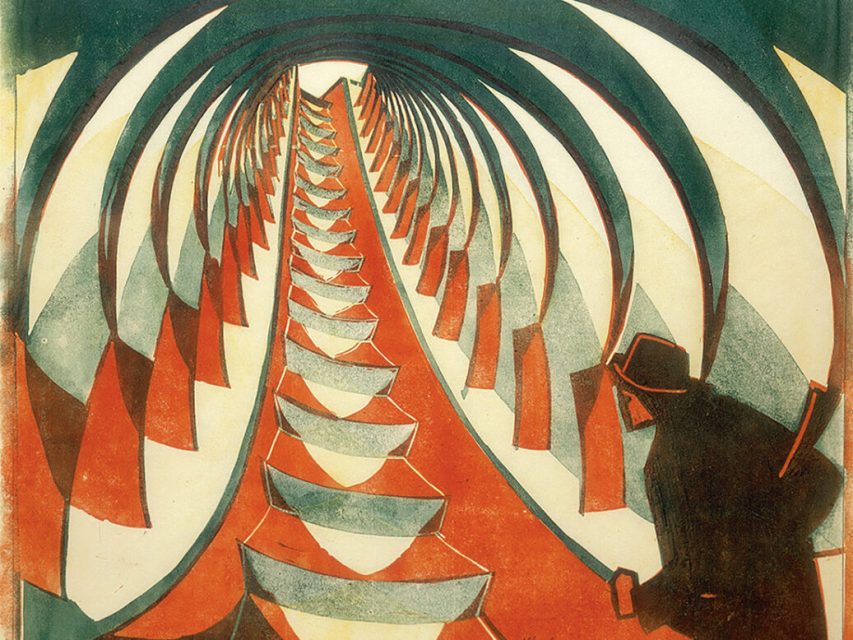
Cyril Edward Power, The Tube Station, 1929.
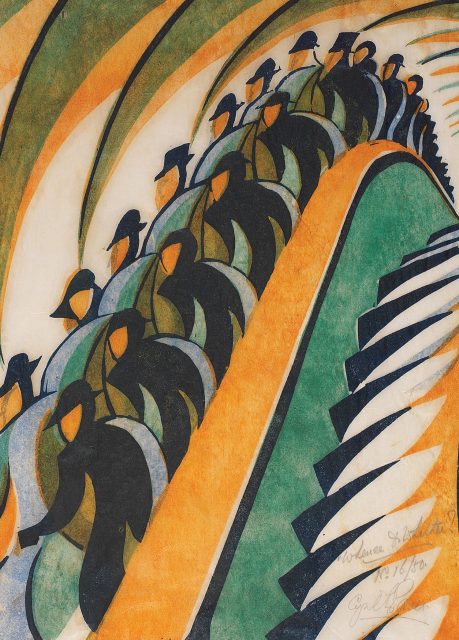
Cyril Edward Power, Escalator, 1929. Linocut.
Another one by Cyril Edward Power, Escalator, 1929. Linocut.
Frank Hinder, Escalator, mid-20th century.
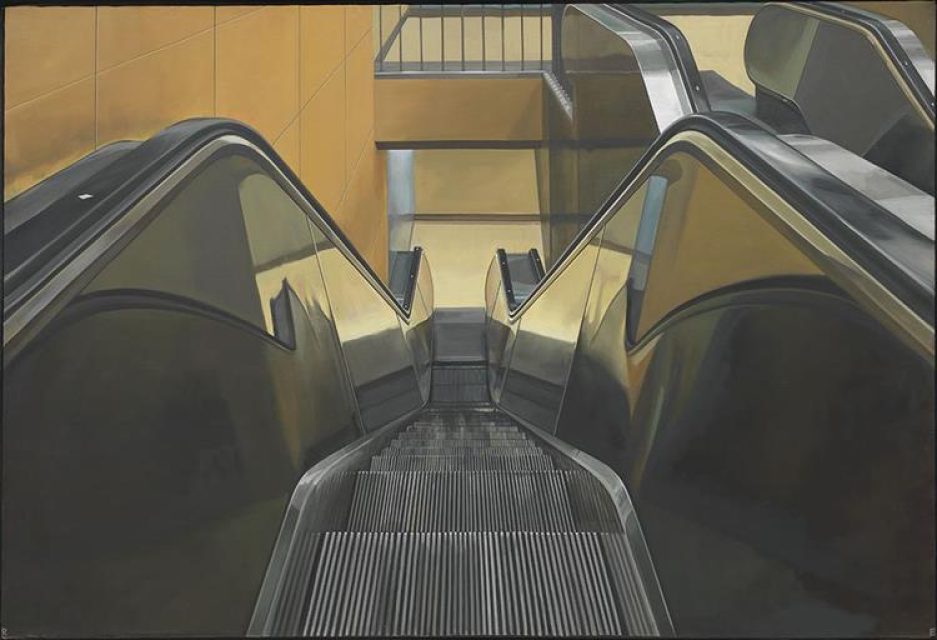
Richard Estes, Escalator, 1979.
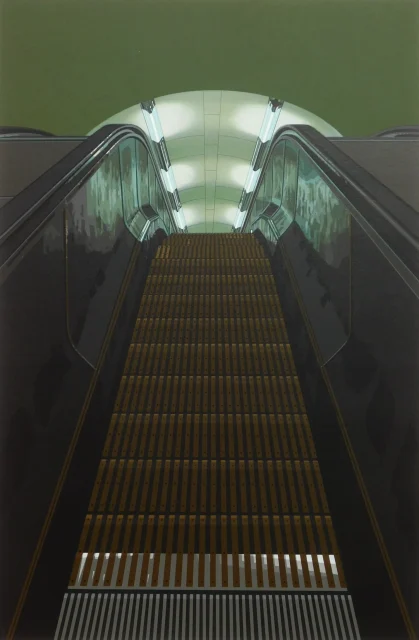
Another escalator by Richard Estes.
Candida Höfer, Bahnhof Stadelhofen, Zürich, 1991.
Andreas Gursky, Charles de Gaulle Airport, 1992.
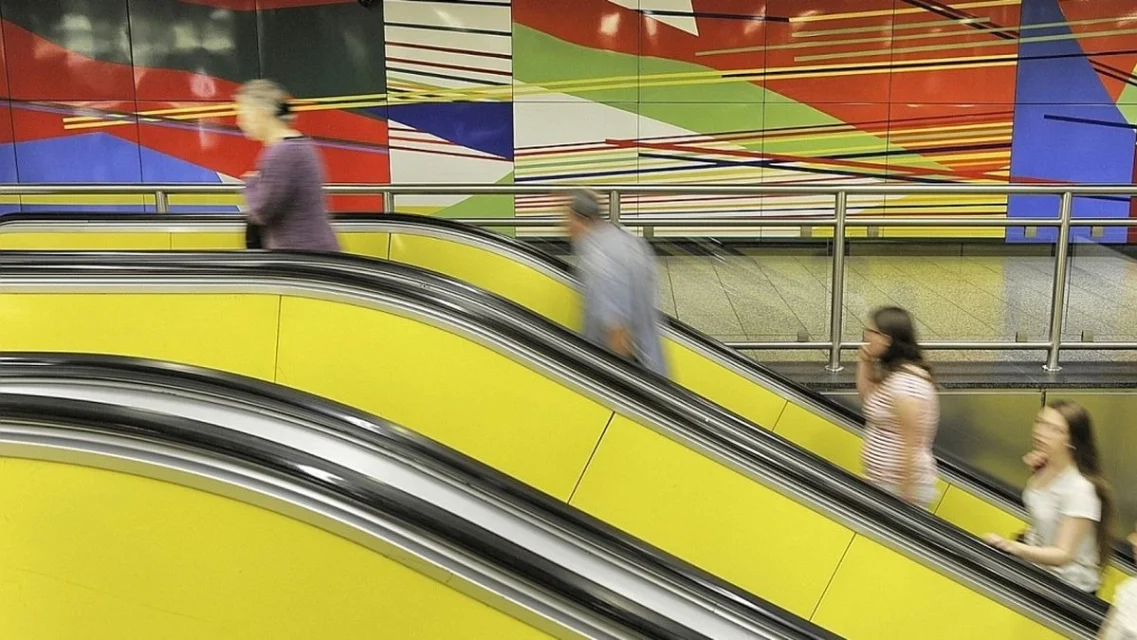
Gerhard Richter and Isa Genzken, mural in Düsseldorf U-Bahn station, with escalators in circulation.
Thomas Demand, Escalator, 2000.
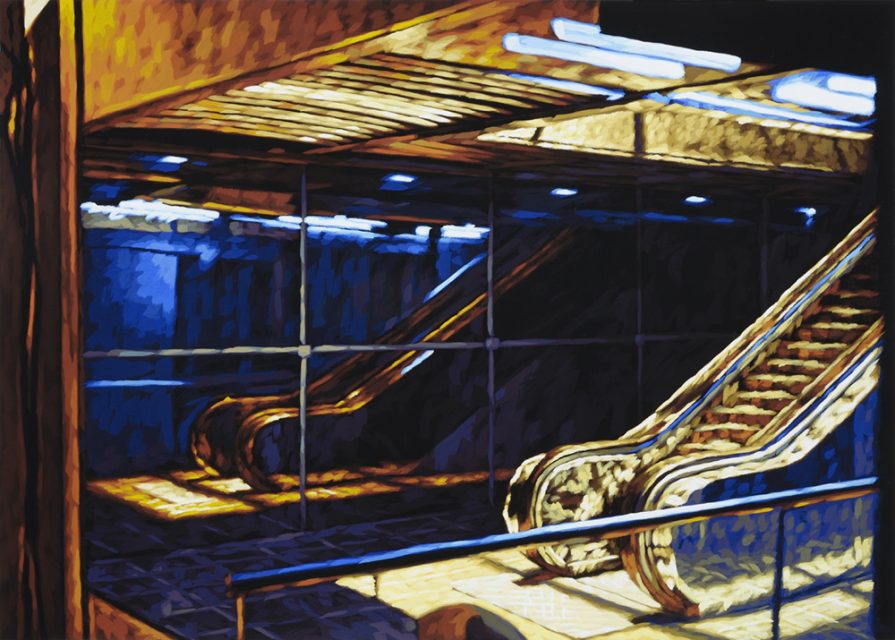
My tempera on paper (137P), 2010. 50 × 70 cm.
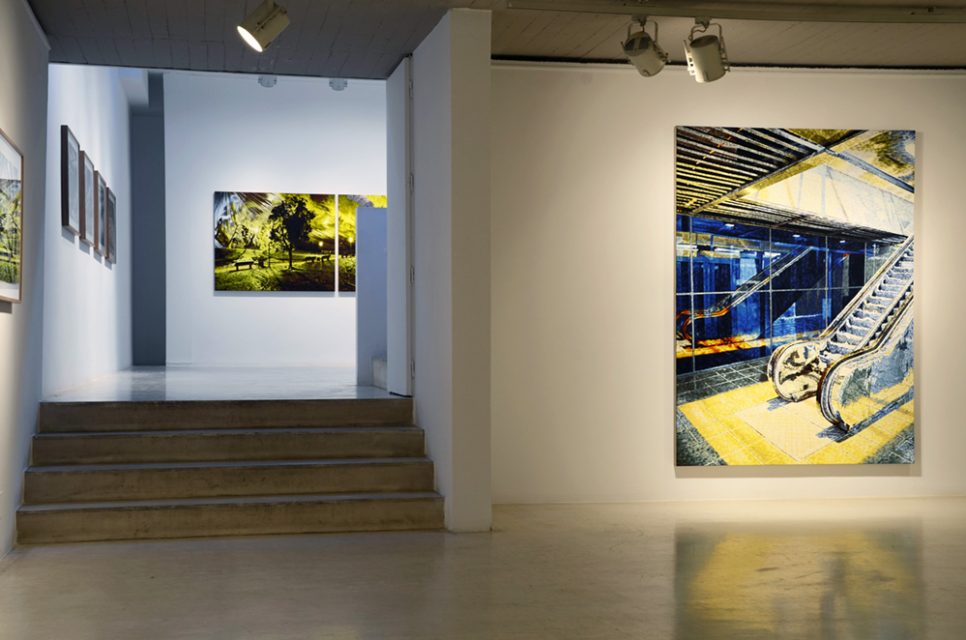
Remote Viewing, Galería Soledad Lorenzo, 2012.
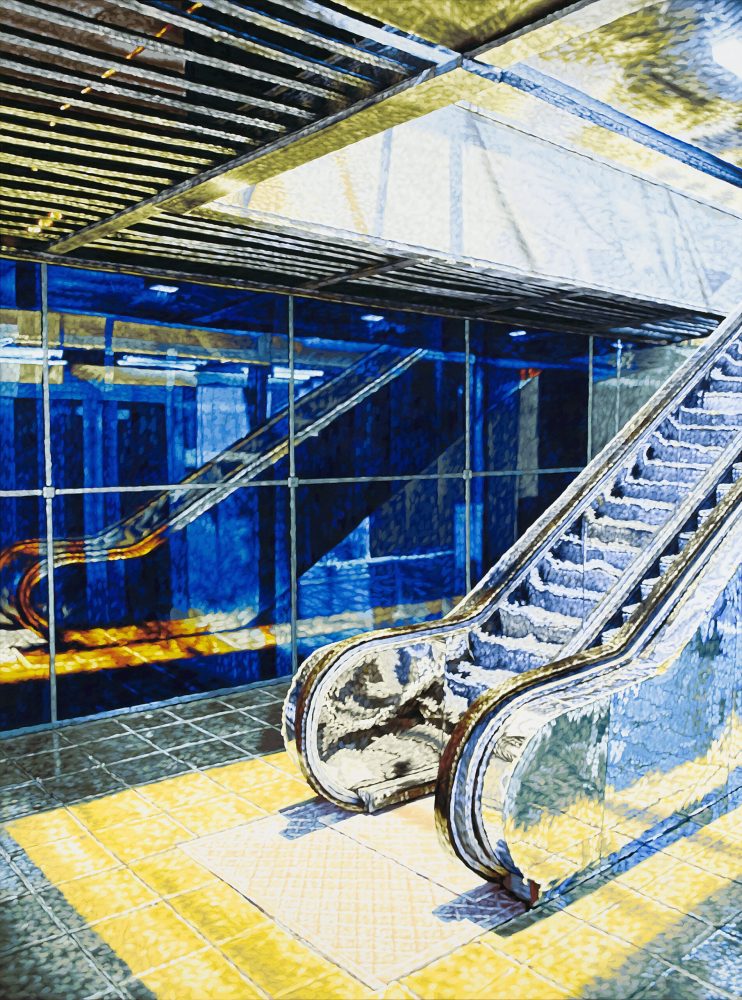
Philipp Fröhlich (118L), 2011, tempera on canvas, 195 x 145 cm
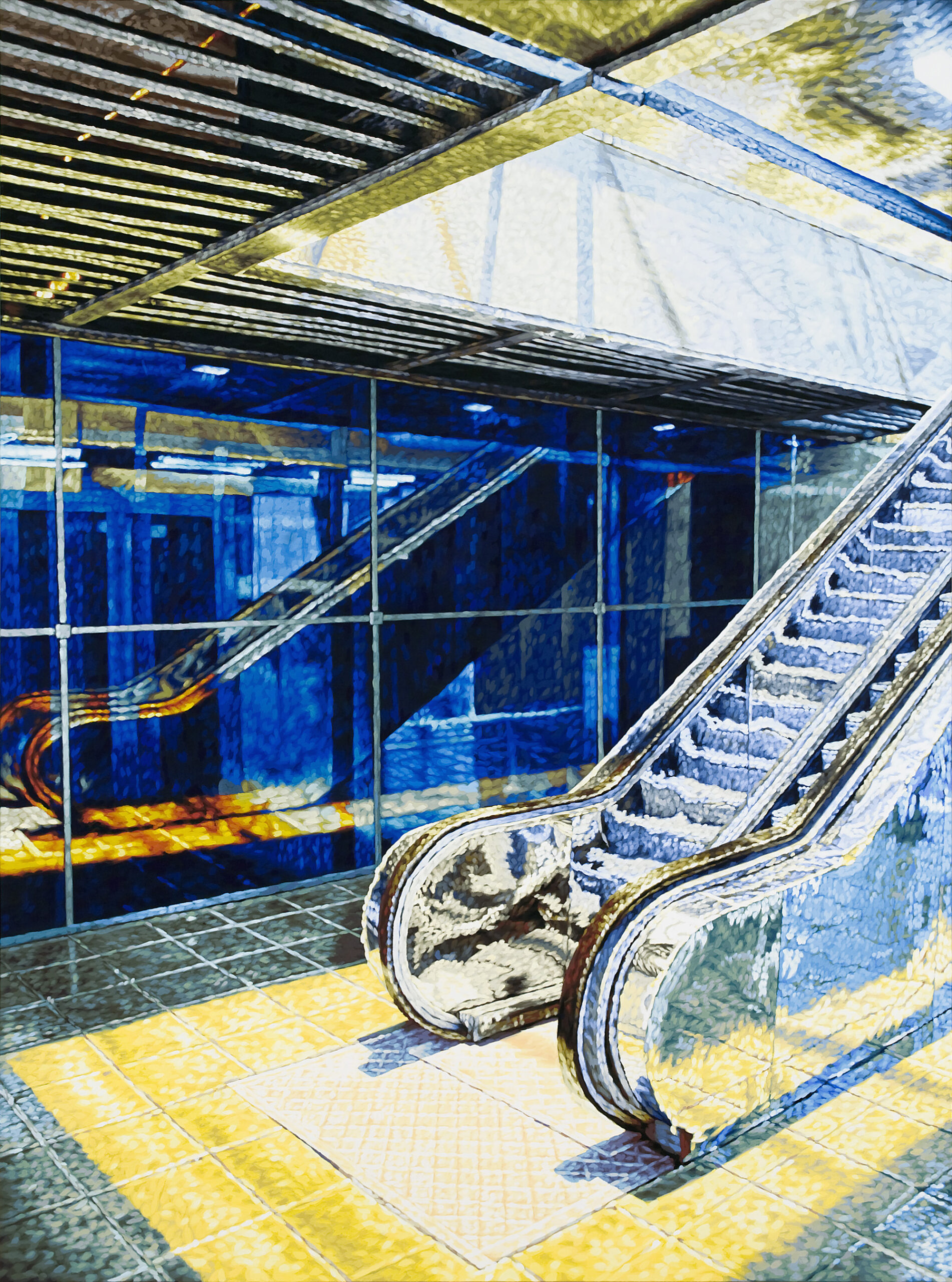
(118L), 2011, tempera on canvas, 195 x 145 cm

Sign up to receive a brief update every two weeks when a painting is added.