Falada            

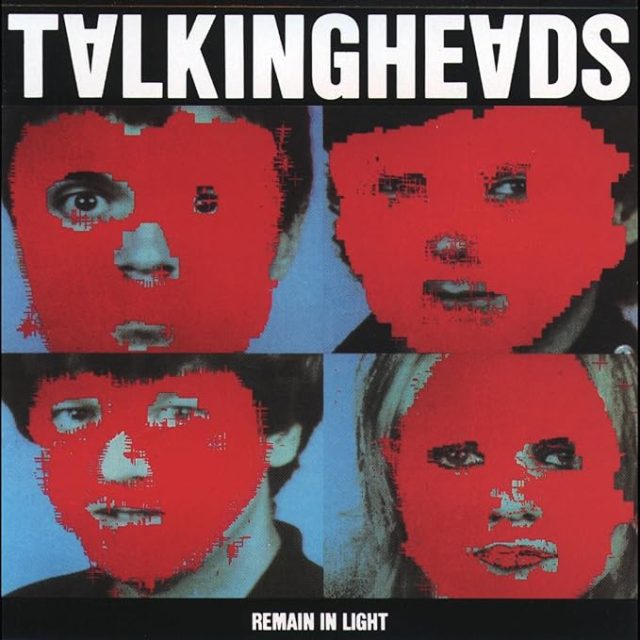
According to bassist Tina Weymouth, the New York band Talking Heads took their name from an issue of TV Guide that included a glossary of television jargon. A “talking head” was defined as a head-and-shoulders shot of a person speaking. All content, no action.

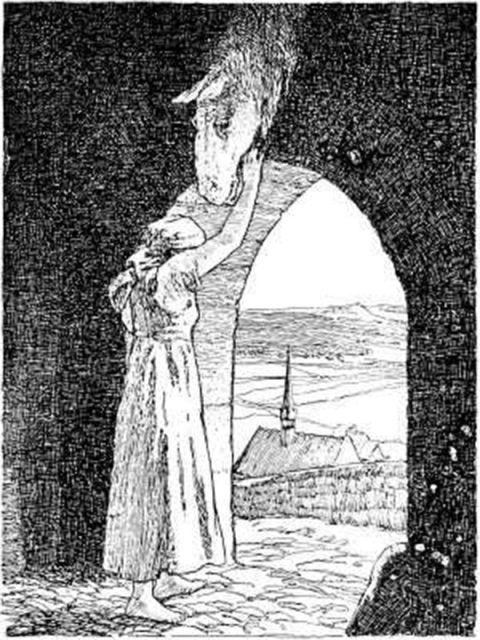
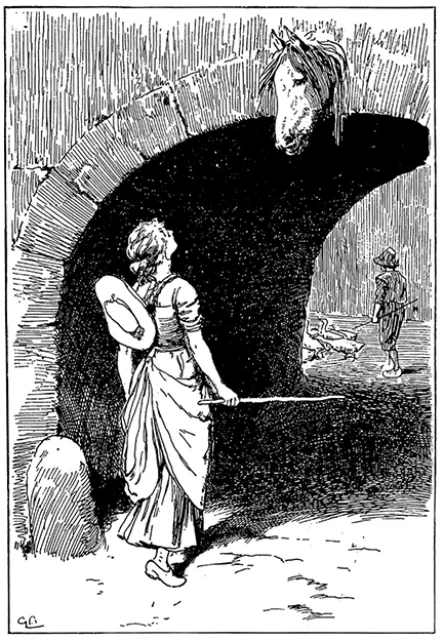
The fairy tale “The Goose Girl,” from the collection of the Brothers Grimm, is a story about betrayal and the inversion of hierarchy. A princess is forced by her maid to exchange identities on the journey to the court of her future husband. Stripped of her status and forced to swear never to tell a living soul, she is sent to tend geese, while the maid takes her place and marries the young king. The princess’s horse Falada is killed, and his severed head is nailed to the city gate.

This condition, however, does not stop the horse’s head from speaking. Each time the real princess, now tending the flock as a servant, crosses through the gate, she addresses the head with the words, “O Falada, dost thou hang there?”

And the head answers:

“Princess, dost thou so meanly fare?
But if thy mother knew thy pain,
Her heart would surely break in twain.”

In the course of the story, this brief exchange triggers the eventual revelation of the deception, restoring the rightful order.

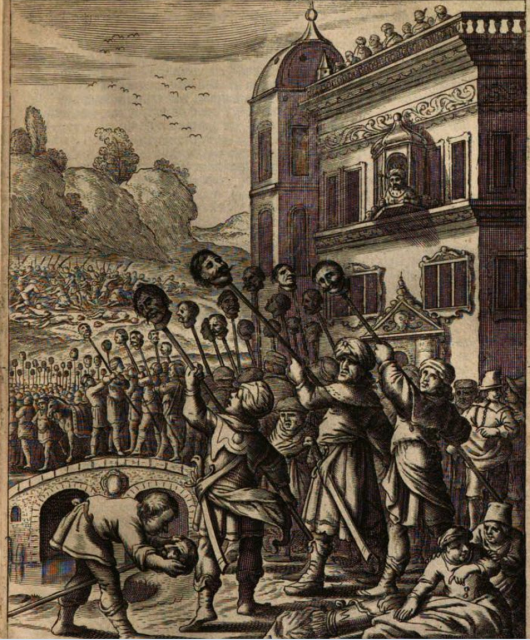
Up to the early modern period, heads of criminals, especially those condemned of treason, were mounted on poles and displayed on gates and bridges. There is a strange architectural correlation between the elevated head as a kind of capital and the gate or bridge forming the body beneath it, like walking through the open legs of a giant.

Meant as a display of justice, power, and a warning about the consequences of rebellion, the head on the threshold still presents a factual truth to those entering and passing below.

Oliver Cromwell led the parliamentary forces that defeated the king, abolished the monarchy, and executed Charles I during the English Civil War. He then ruled England himself as Lord Protector for five years, dying eventually of natural causes. Following the Restoration of the monarchy, after his son proved an inept successor, Cromwell’s body was exhumed from Westminster Abbey, symbolically executed as a traitor, and beheaded. His head was dipped in tar and spiked on a pole above Westminster Hall, where it remained for over two decades.

From this vantage point, it signified justice and the rightful return of the monarchy to Royalists. To former supporters, on the other hand, it could equally signify the vengeful reassertion of absolute power, the political rewriting of the recent past, and a deliberate humiliation.

In 1932, on the eve of catastrophe, Bertolt Brecht took up Falada in his haunting ballad O Fallada, da du hangest, set to music by Hanns Eisler. Here the horse recounts how it was butchered by a hungry crowd after collapsing in the street. It ends with a warning:

Then I asked myself: What kind of coldness
Must have come over the people?
Who is striking them so hard
That they have grown so cold through and through?
Help them, then. And do it soon.
Or something will happen to you that you would not think possible.
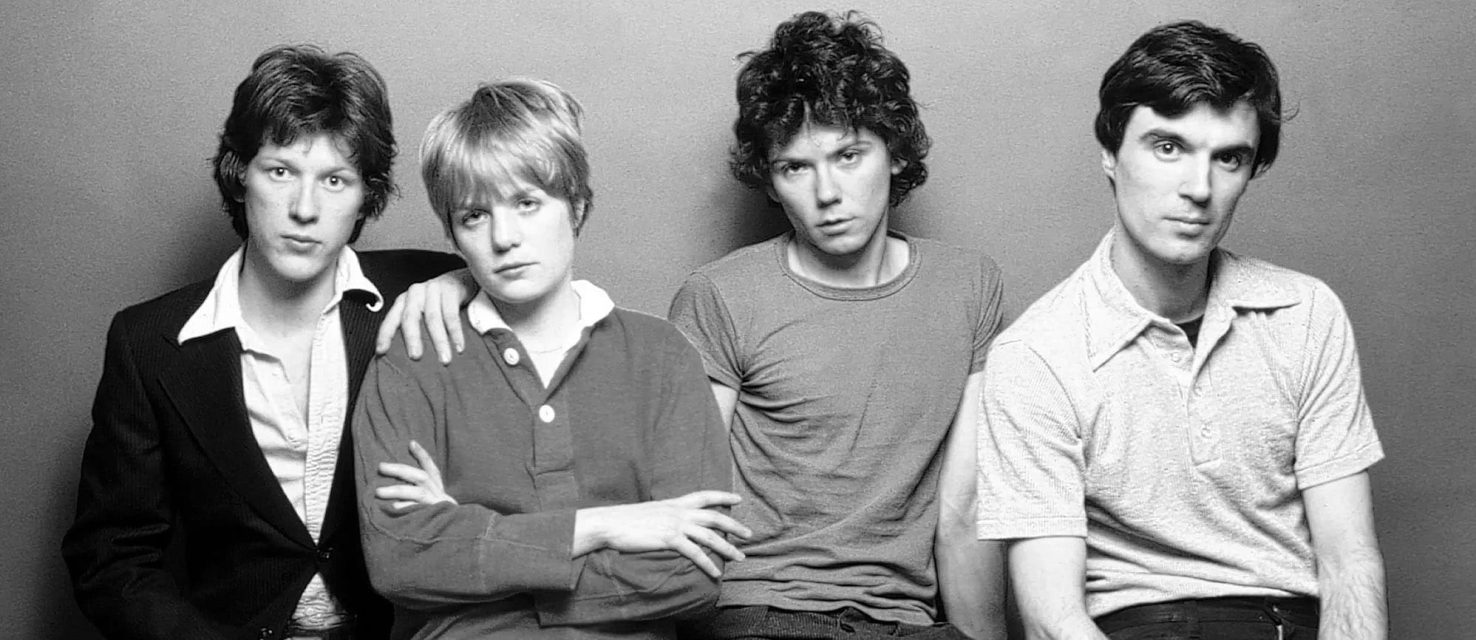
Talking Heads, press photograph, late 1970s.
Remain in Light, 1980.
Otto Ubbelohde, Falada’s head at the gate, illustration for the Grimm fairy tales.
Gordon Browne, Falada at the gate, illustration for The Goose Girl.
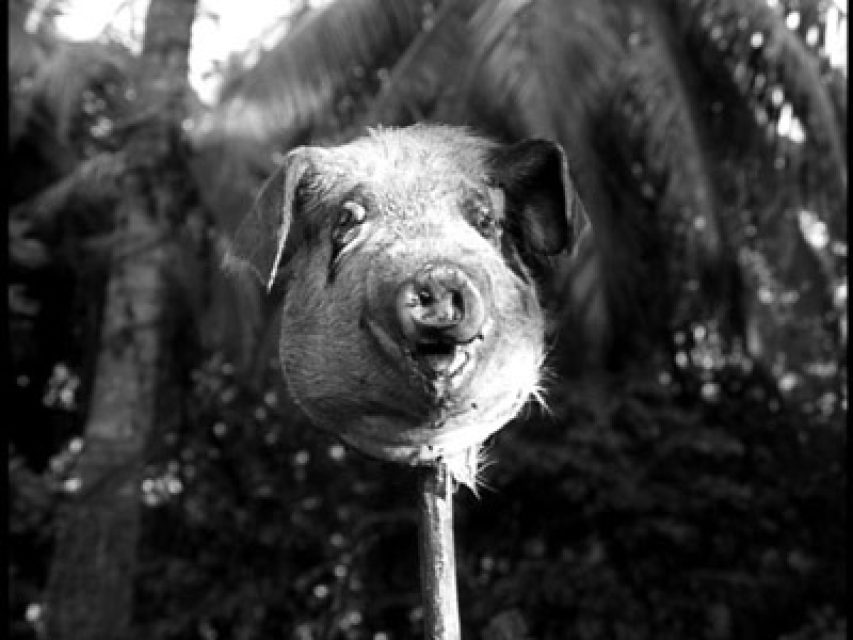
Pig’s head on a stake, from the film adaptation of Lord of the Flies.
European depiction of defeated Ottoman heads mounted on spears after the Safavid recapture of Tabriz under Shah Abbas I, early 17th century.
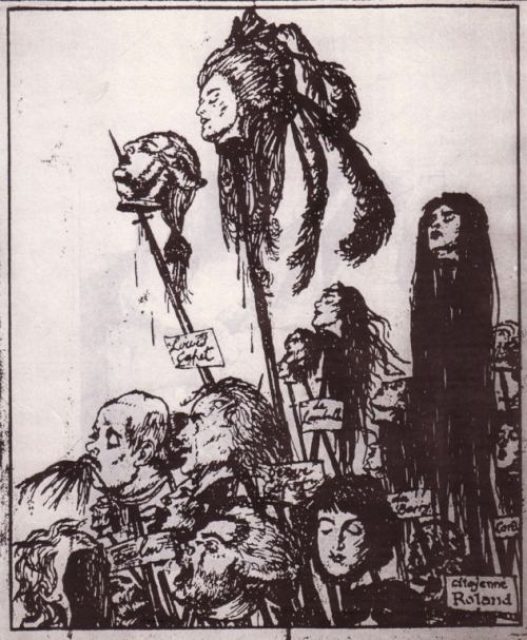
Satirical illustration of severed heads mounted on stakes
Satirical illustration of severed heads mounted on stakes.
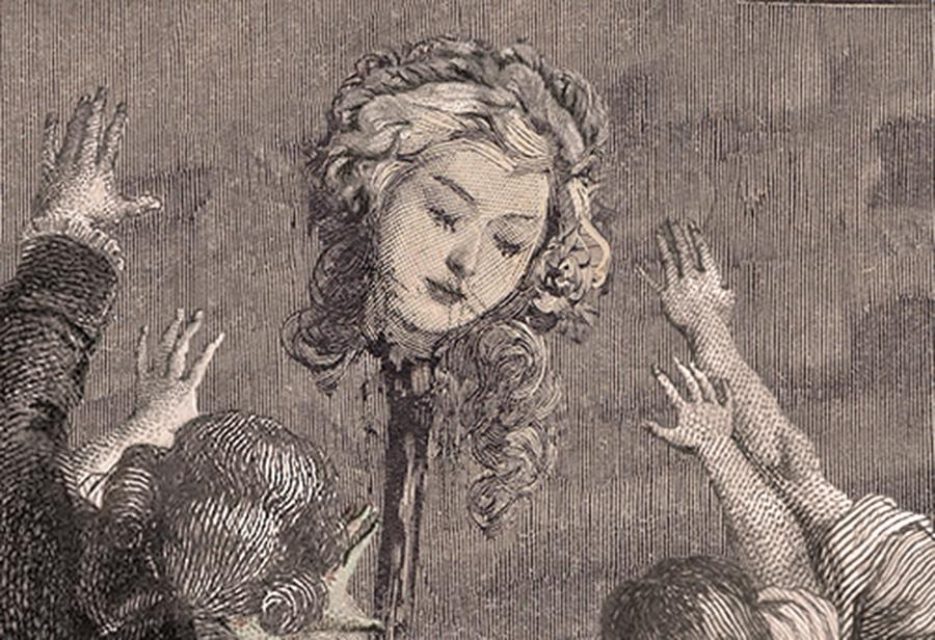
The severed head of the Princess de Lamballe displayed during the French Revolution, 1792.
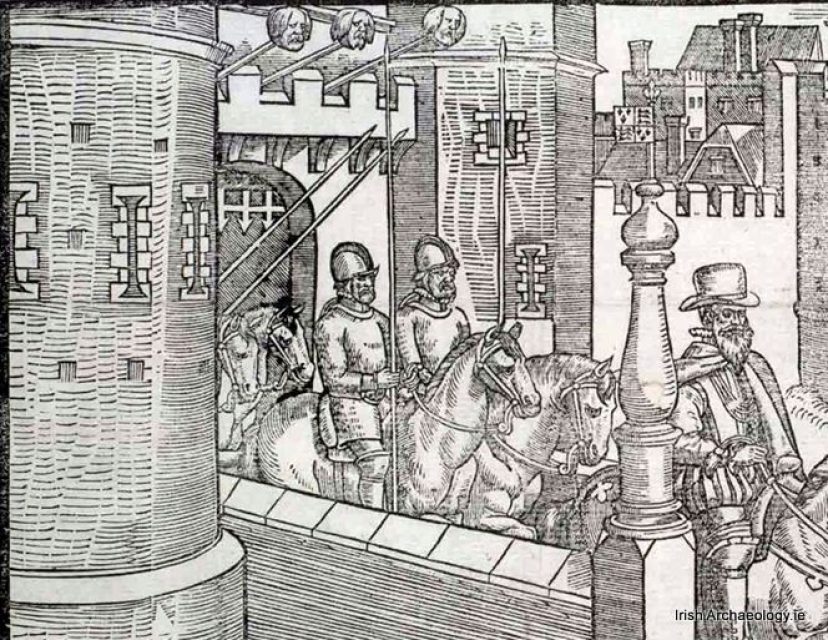
Dublin Castle, heads displayed above the gate.
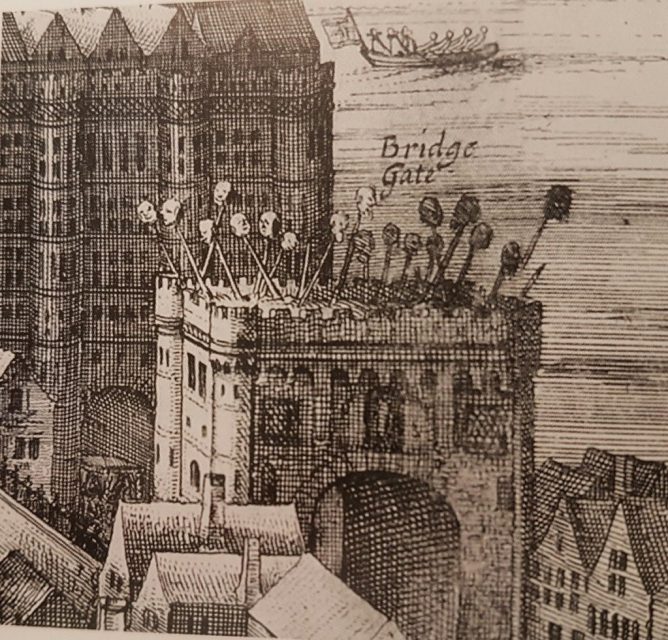
Old London Bridge. For centuries, the heads of traitors were fixed above the gate.
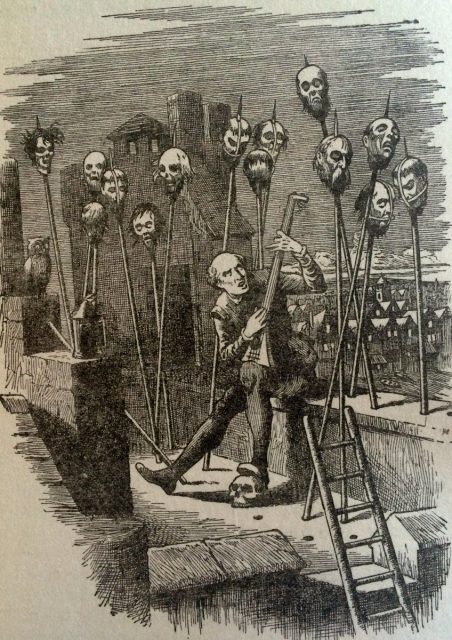
The keeper of the mounted heads, illustration.
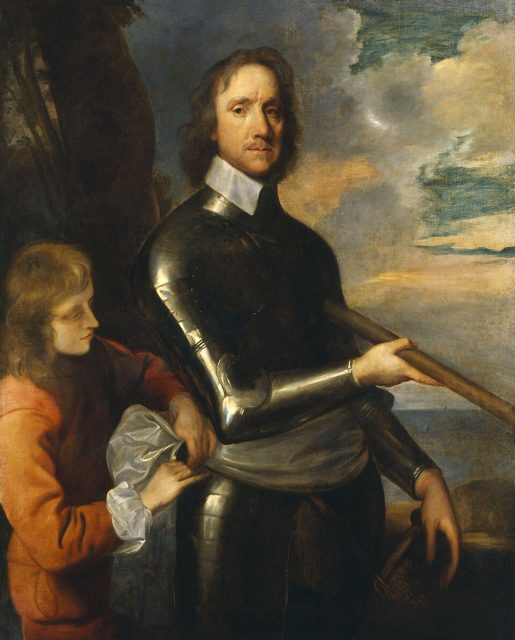
Oliver Cromwell, portrait attributed to Robert Walker, c. 1649.
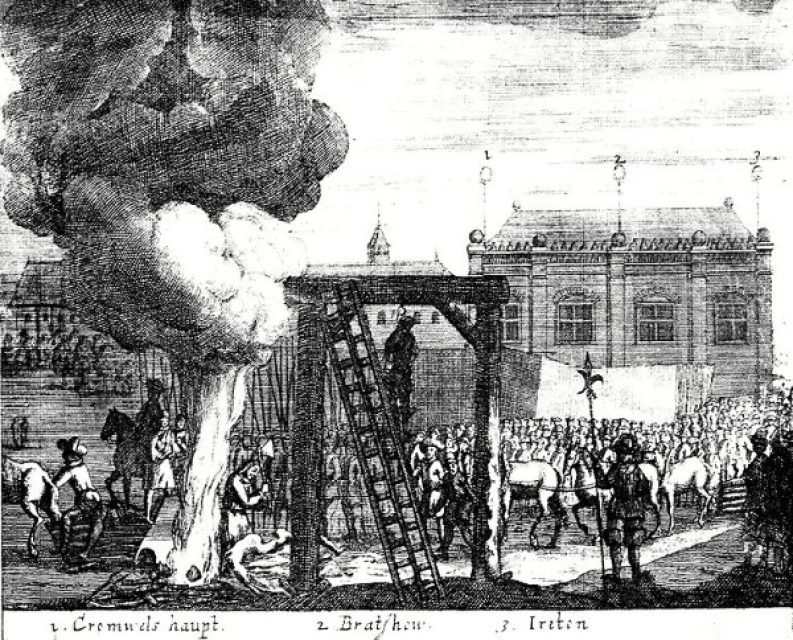
Posthumous execution of Oliver Cromwell at Tyburn, 1661.
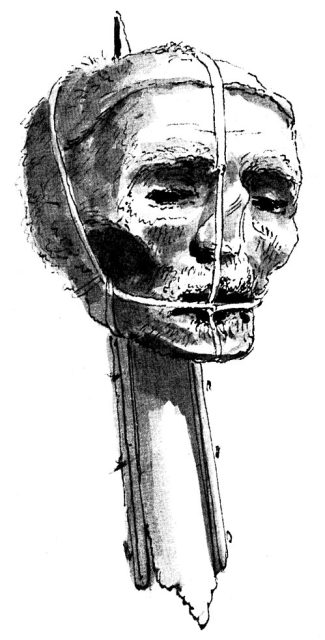
Severed head of Oliver Cromwell, sepia drawing after Thomas Pennant’s London, c. 1790.
Cromwell’s severed head was displayed on the roof of Westminster Hall for roughly twenty-five years before being blown down in a storm and subsequently disappearing into private hands. Sepia drawing, c. 1790.
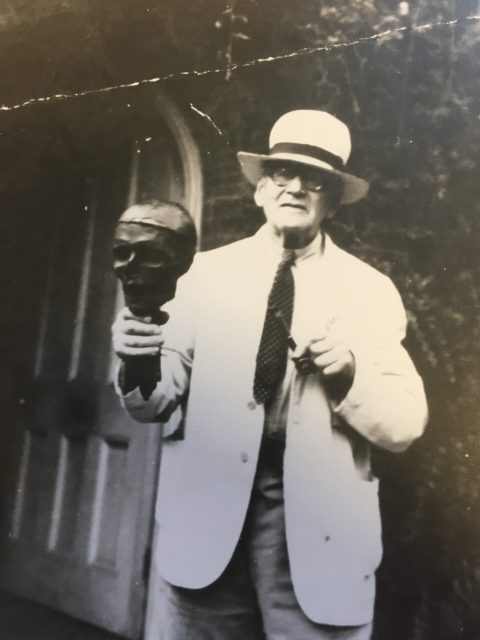
The head was intermittently exhibited as a curiosity, authenticated, doubted, sold, and resold. In the early twentieth century it came into the possession of Horace Wilkinson, whose family retained it until its burial in 1960 at Sidney Sussex College, Cambridge.
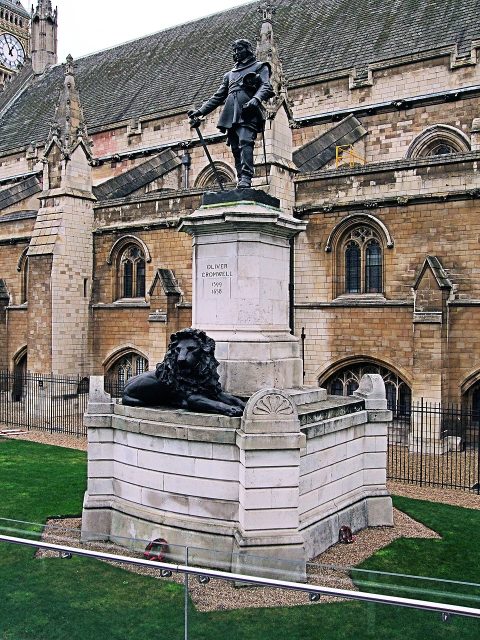
Statue of Oliver Cromwell outside the House of Commons, 1899. For some a founder of parliamentary sovereignty, for others a reminder of regicide and the violent campaign in Ireland.
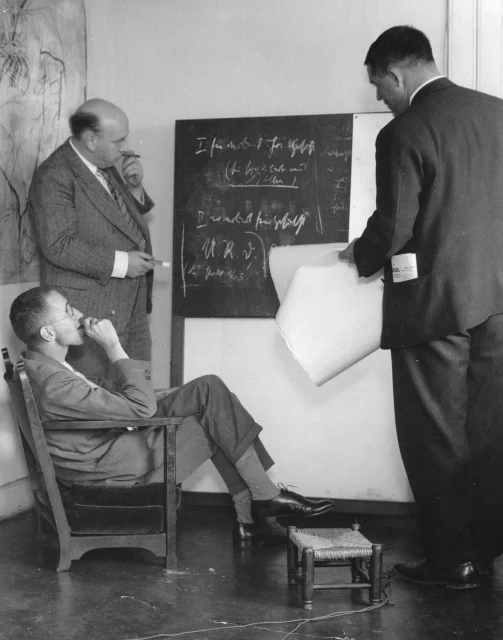
Bertolt Brecht and Hanns Eisler, 1932.
Illustration of Falada from a GDR edition of The Goose Girl.
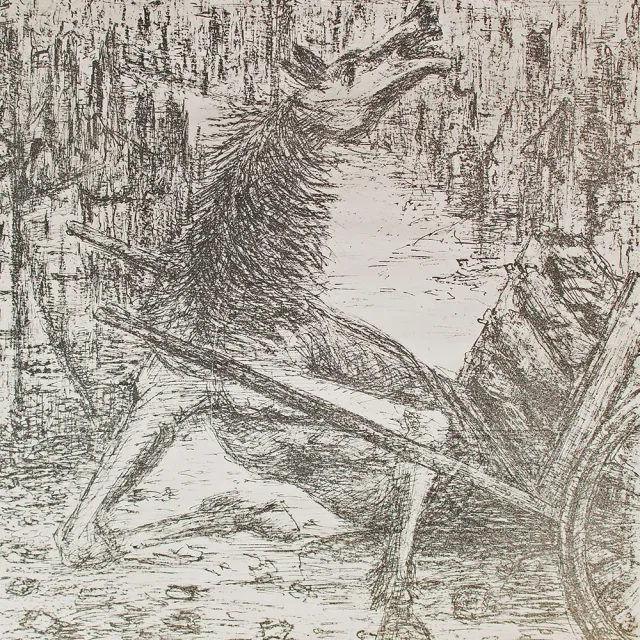
Illustration of Brecht's song from a GDR edition.
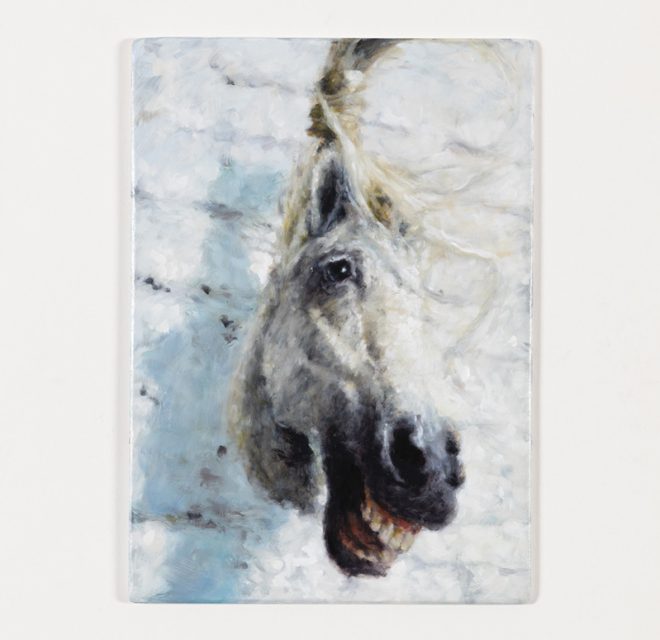
An oil sketch of Falada by Philipp Fröhlich
An oil sketch of Falada.
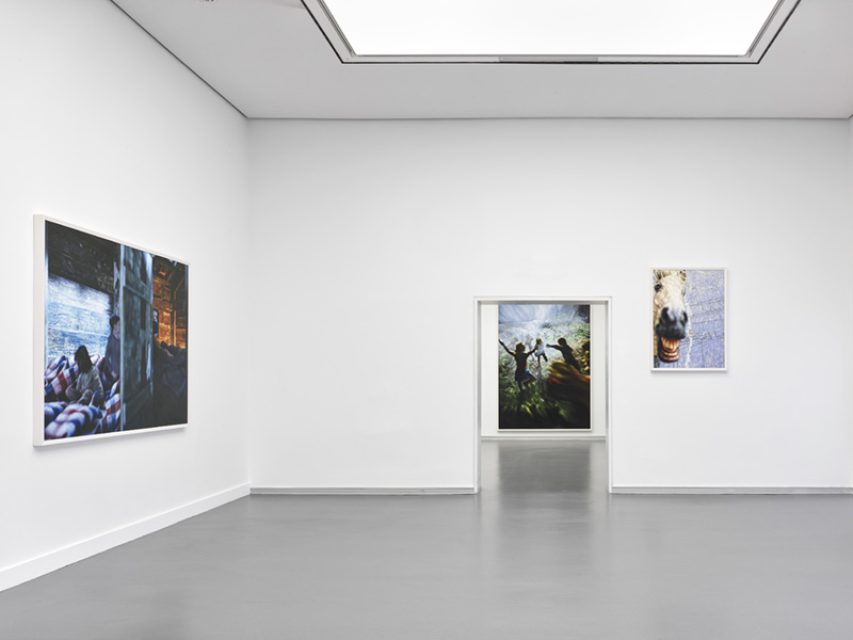
Märchen, Philipp Fröhlich. Kunsthalle
The painting shown at Kunsthalle Barmen in 2021.
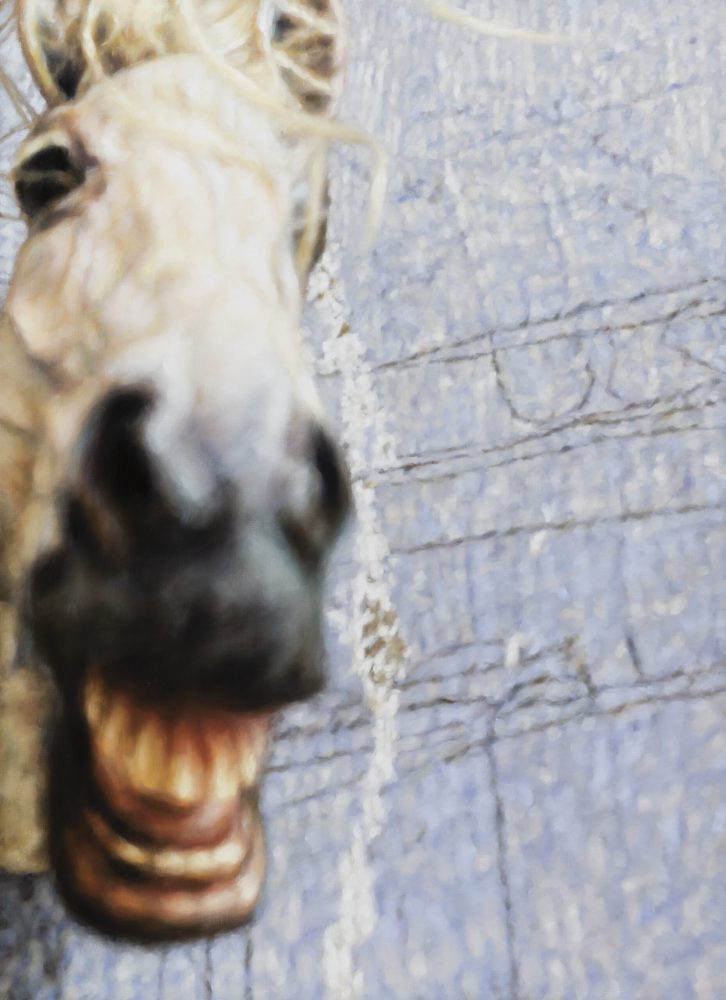
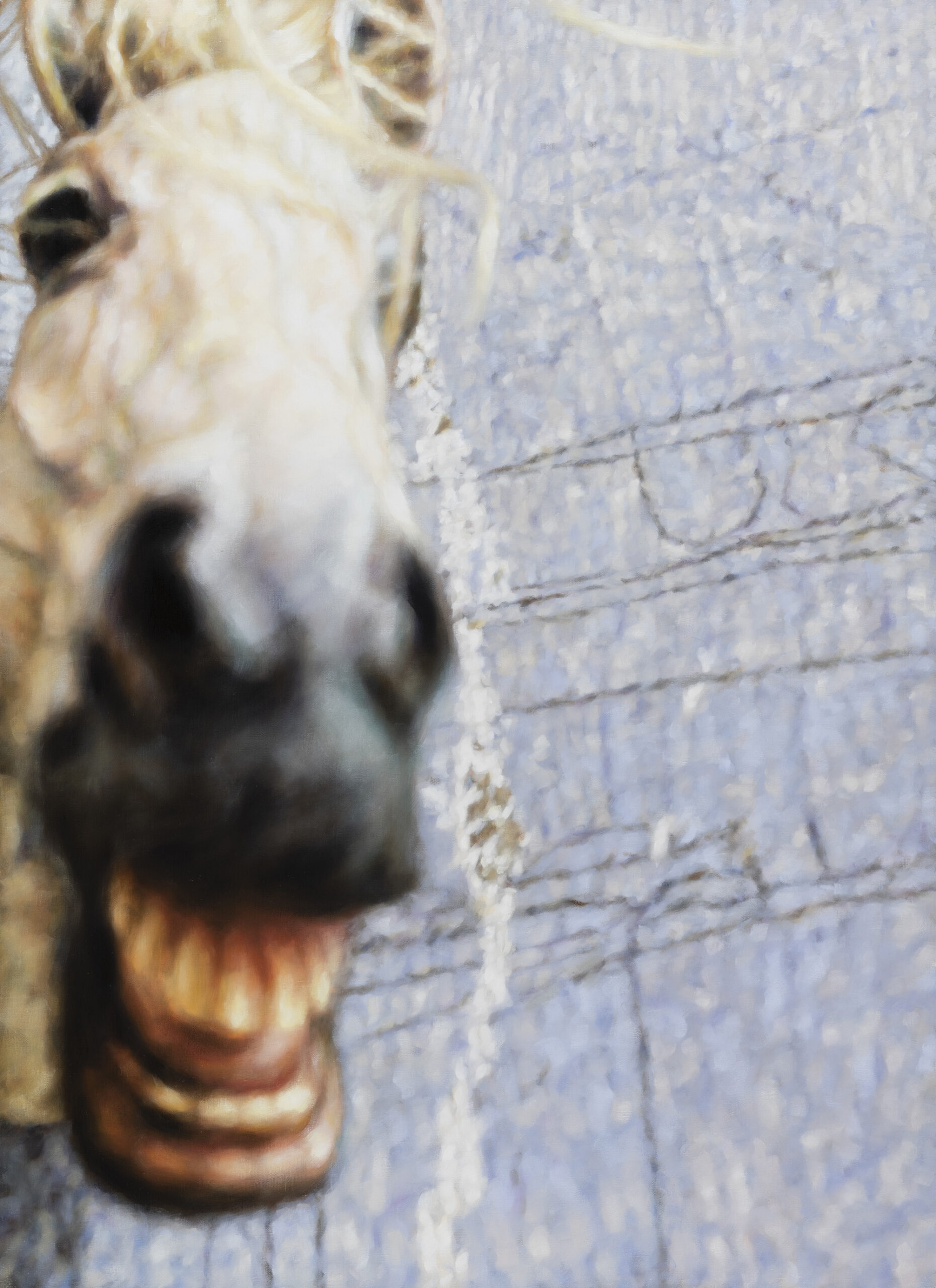
Philipp Fröhlich's Falada from the Goose Maid
Falada (281L), 2020, oil on canvas, 110 x 80 cm

Sign up to receive a brief update every two weeks when a painting is added.