The fragility of shelter runs through many fairy tales. In The Wolf and the Seven Little Goats, protection is undone by deception, as the wolf gains entry by imitating the mother. In The Three Little Pigs, the threat is direct:
“Then I’ll huff
and I’ll puff
and I’ll blow your house down.”
A house appears to offer protection from the outside world, yet danger is already present at its boundary. It cannot be excluded, only delayed. A house is a contract with its environment. It negotiates weather, time, ownership, and threat. Walls and roofs do not eliminate what lies beyond, but regulate it.
In the Scottish fairy tale The Hobyahs, the hut offers little protection. Instead, a small black dog keeps the Hobyahs at bay:
One night, when the little old man and the little old woman were asleep, out from the deep woods, creep, creep, creeping, came the Hobyahs. Through the long grass, run, run, running, came the Hobyahs. Skip, skip, skipping, on the end of their toes, came the Hobyahs. And the Hobyahs cried “Hobyah! Hobyah! Hobyah! Tear down the hut of hemp stalks, eat up the little old man, and carry off the little old woman!”
Each night the dog’s barking drives them off, but its noise disturbs the old man. As a punishment, he cuts off its tail, then a leg, and finally its head. Once it can no longer bark, the Hobyahs return and tear down the hut.
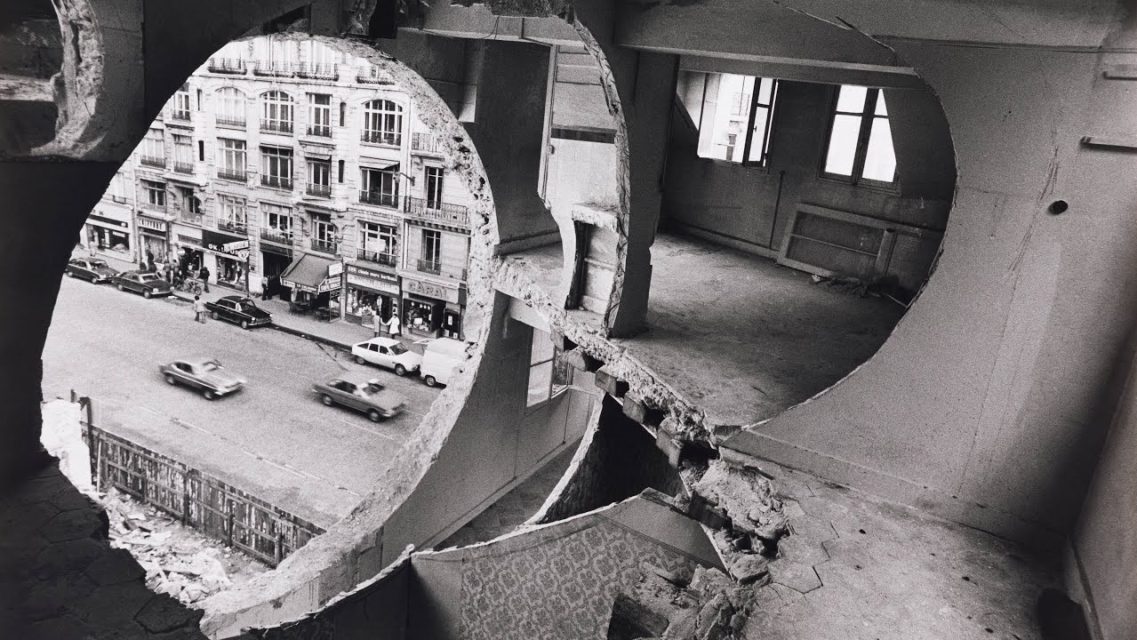
When the boundary of a shelter fails, houses are torn open and spaces of intimacy that were never meant to be seen from the outside are turned outward, as seen in images from Ukraine or Gaza. What becomes visible is hard to grasp: the loss of shelter and the loss of privacy occur at once.
Not all shelter is lost through violence. A house can remain standing while its protection is withdrawn, as in Lorine Niedecker’s poem Foreclosure:
Tell em to take my bare walls down
my cement abutments
their parties thereof
and clause of claws
Leave me the land
Scratch out: the land
May prose and property both die out
and leave me peace