![Philipp Fröhlich's painting Dornröschen [Sleeping Beauty] (226L), 2017, oil on canvas, 245 x 175 cm](https://philippfrohlich.com/wp-content/uploads/2026/05/Philipp_Frohlich_226LDornroschen2017_245x175cm_oleo-scaled.jpg)
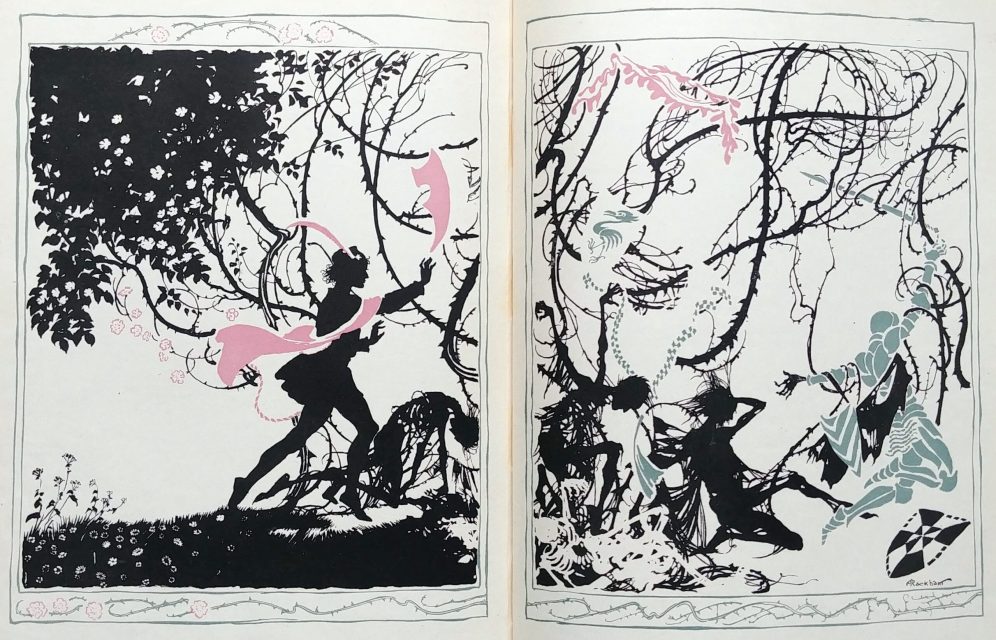
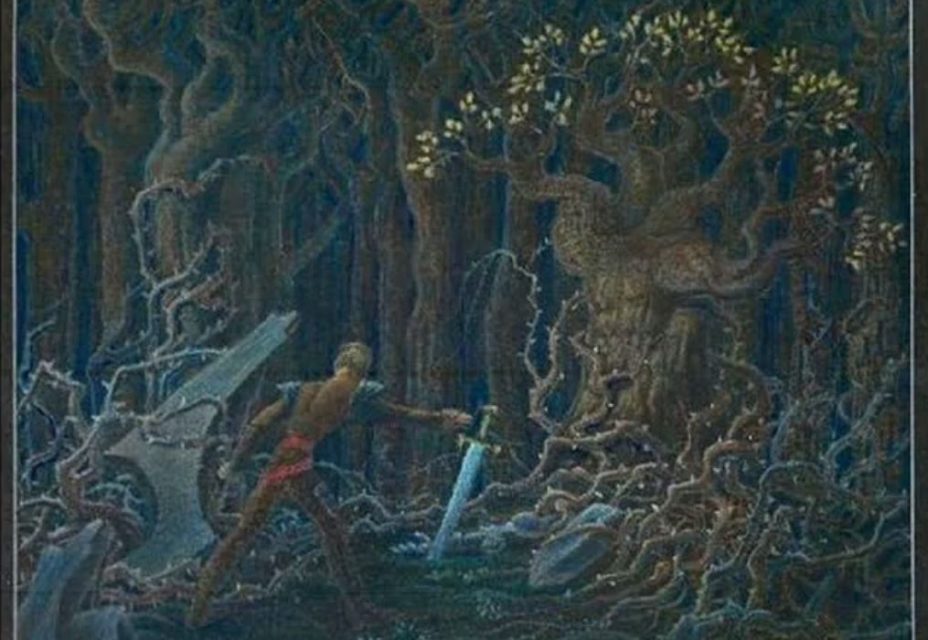
A fellow painter saw this painting based on Sleeping Beauty in my studio while it was still little more than an underpainting and was particularly taken by it. I suspected he preferred this rougher state to the finished paintings, which probably seemed too polished to him. Months later we met again at an art fair in Madrid where the completed painting was hanging. With a certain malice I asked him whether he still liked it now that it was finished. “Even more so,” he said, and added: “It’s very ironic.” I replied that I did not mean it ironically at all, but completely serious.
It might seem an odd proposition for an adult, but taking fairy tales completely seriously and as literally as possible was the precondition for working with them at all. Then again, painting itself might be an odd proposition for an adult too.
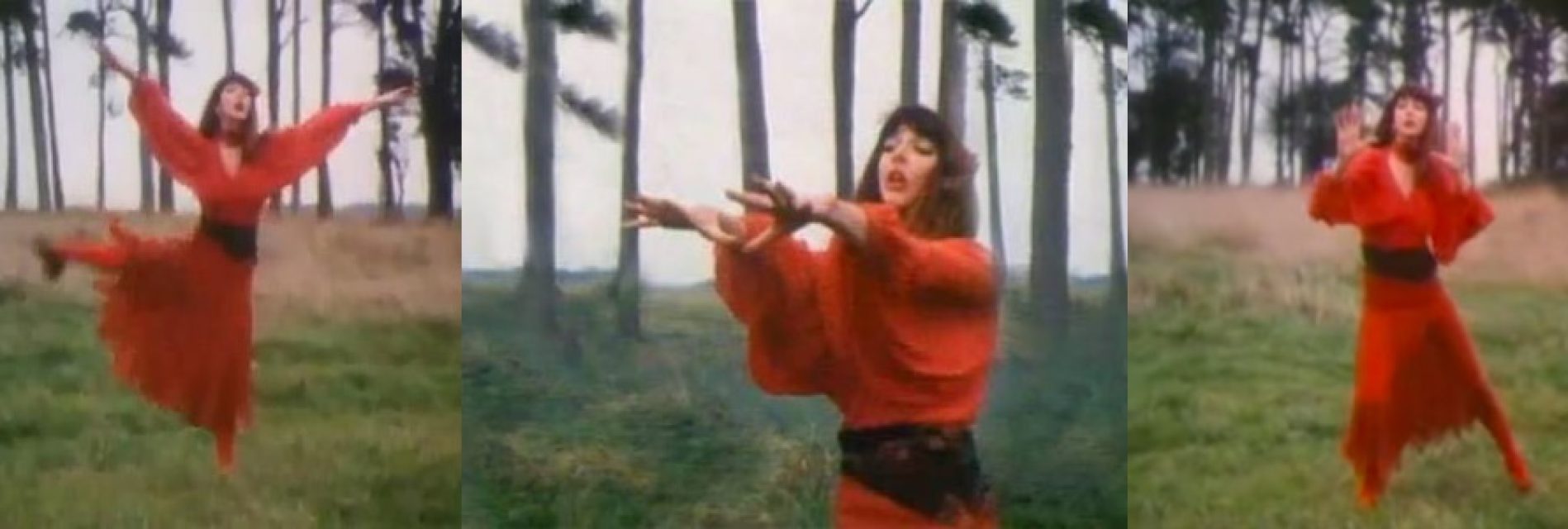
One of my favourite music videos of all time is Kate Bush’s 1978 outdoor video for Wuthering Heights. It shows her dancing a self-invented expressive choreography in a red dress on a grassy field with pine trees in the background. The dance constantly risks seeming ridiculous, but the absolute sincerity and commitment of her performance is so disarming that such thoughts disappear almost immediately.
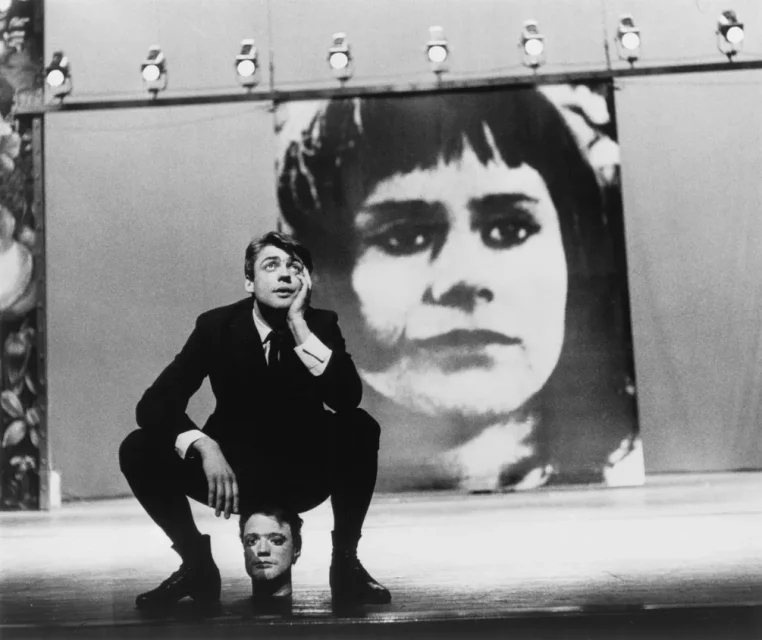
There is a scene in Frank Wedekind’s children’s tragedy Awakening of Spring that always crosses my mind in this context. In the last scene, the ghost of Moritz Stiefel, his head under his arm, tries to convince his friend Melchior to take his own life, as he himself had done:
“We are no longer reachable for anything, neither for good nor evil. We stand high, high above earthly things — each by himself alone. We do not associate with one another because it bores us too much. None of us still harbours anything that could be taken away from him. Above misery or jubilation we are equally immeasurably elevated. We are satisfied with ourselves and that is all! — We despise the living unspeakably, scarcely even pitying them. Their fussing amuses us because, being alive, they are not truly to be pitied. We smile at their tragedies — each to himself — and make our observations. — Give me your hand!…”
And later:
“We are too high for that. We smile! … Our unapproachable superiority is in fact the only perspective from which all this nonsense can be digested…”
Then suddenly a masked man appears and opposes Moritz, saying:
“Your friend is a charlatan. No one smiles who still has a penny left in his pocket. The sublime humourist is the most miserable, most pitiable creature in all creation!”
He persuades Melchior not to follow Moritz’s example. Once they exit the scene, Moritz ends the play with the words:
“— So here I sit with my head in my arm. — — The moon veils its face, unveils it again and does not look a hair wiser. — — So I return to my little place, straighten the cross that the fool so carelessly trampled down, and when everything is in order, I lie down again on my back, warm myself by the decay and smile…”




![Frank Wedekind, who was only twenty-six when writing Frühlingserwachen [Awakening of Spring].](https://philippfrohlich.com/wp-content/uploads/elementor/thumbs/Wedekind-ro37tycnuiz36h21ude7ofy2vt7u800e63gvojxce8.jpg "Wedekind")
![The first edition cover of Wedekind’s Frühlings Erwachen [Awakening of Spring], published in 1891.](https://philippfrohlich.com/wp-content/uploads/elementor/thumbs/Fruhlings_Erwachen-ro37v8er5eq4zd75dfaxkmbnzowtp638offo7411xc.jpg "Frühlings_Erwachen")

![Final graveyard scene from Max Reinhardt’s first production of Frühlings Erwachen [Awakening of Spring], Berlin, 1906.](https://philippfrohlich.com/wp-content/uploads/elementor/thumbs/Spring-Awakening-1906-ro37zgolwkil871yo94hsjwc842ac4vr9d4bxxr9xc.jpg "Spring-Awakening-1906")
![Dornröschen [Sleeping Beauty], 2017, oil on canvas, 110 × 145 cm.](https://philippfrohlich.com/wp-content/uploads/elementor/thumbs/Philipp_Frohlich_228LRosendickicht_P_F_2017_110x145cm-ro38d4a76x7jw97vxnmdiluewmr95u3dgyb9xnidj4.jpg "Philipp_Frohlich_228LRosendickicht_P_F_2017_110x145cm")
![Hinter Rosenhecken [Behind Rose Hedges], 2017, oil on canvas, 110 × 80 cm.](https://philippfrohlich.com/wp-content/uploads/elementor/thumbs/0227LHinter_Rosenhecken-_P_F_2017_110x80cm_oleo-ro38f8f4ki3s0o5al2j5mkmr0ubzhbhmrf5lt2dhj4.jpg "0227L(Hinter_Rosenhecken )_P_F_2017_110x80cm_oleo")
![Philipp Fröhlich's painting Dornröschen [Sleeping Beauty] (226L), 2017, oil on canvas, 245 x 175 cm](https://philippfrohlich.com/wp-content/uploads/elementor/thumbs/Philipp_Frohlich_226LDornroschen2017_245x175cm_oleo-scaled-ro31sdnjw36rfliwxowwqfi25u1c3eddxqzywg0sg0.jpg "Philipp_Frohlich_226L(Dornröschen)2017_245x175cm_oleo")