X Marks the Spot

Every day I drop off my daughter next to a yew hedge surrounding her school. It has always surprised me how common these hedges are. Granted, they are dense, slow-growing evergreens, easily cut into shape and function almost as architecture.

Almost every part of the plant is poisonous. Wood, needles and the seeds that hide inside the red berries all are toxic, and fatal if ingested in surprisingly small quantities. In fact, the only part of the tree that is not poisonous is the red flesh of the berries. Victorian children apparently used to pick them to prepare a sticky, very sweet jam.

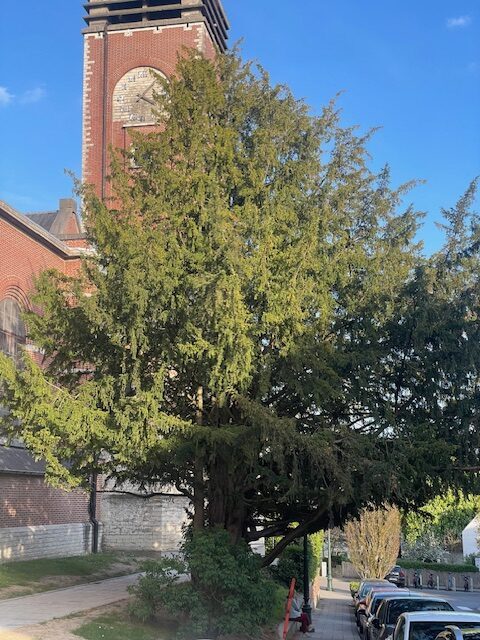
Yews are most commonly found in churchyards and cemeteries. Some are extremely long-lived and may even predate the churches, marking older ritual or burial sites.

Being an evergreen with a very long lifespan, there is almost certainly some kind of symbolism involved. But there might be a practical reason as well. Their extreme toxicity keeps animals and grazing livestock away from the sacred sites.

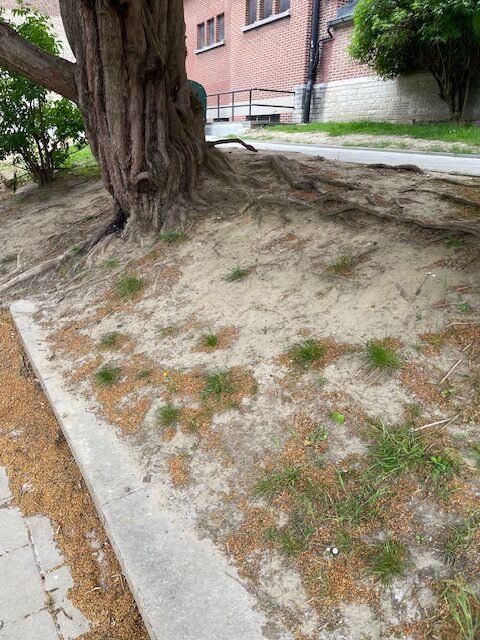
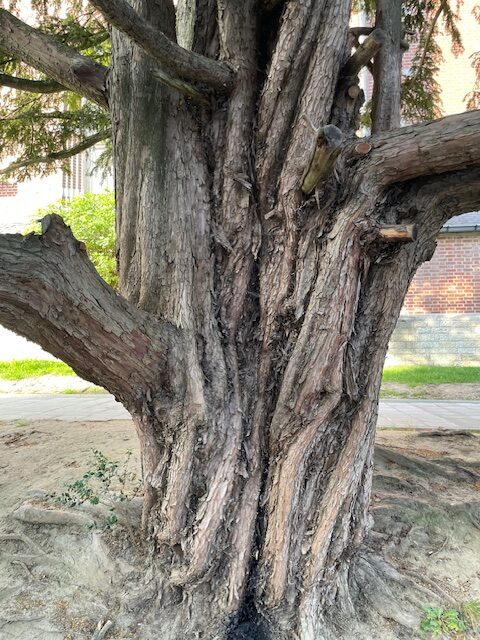
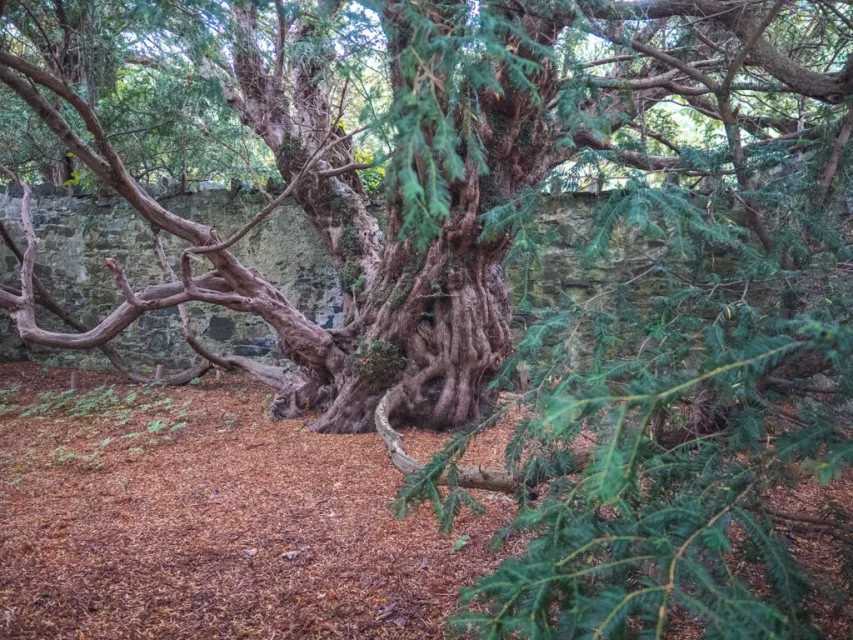
There is often an almost barren spot surrounding the trees, where fallen needles accumulate on the ground. Their decomposition likely releases toxins into the soil, limiting the growth of competing plants and herbs. This is probably part of their survival strategy. But the secret of their potential immortality lies elsewhere. As the tree ages, the trunk often hollows out from rot and decay, but at the same time new shoots can grow from inside or along the trunk. In this way, the aging tree can replace itself from the inside with a younger self.

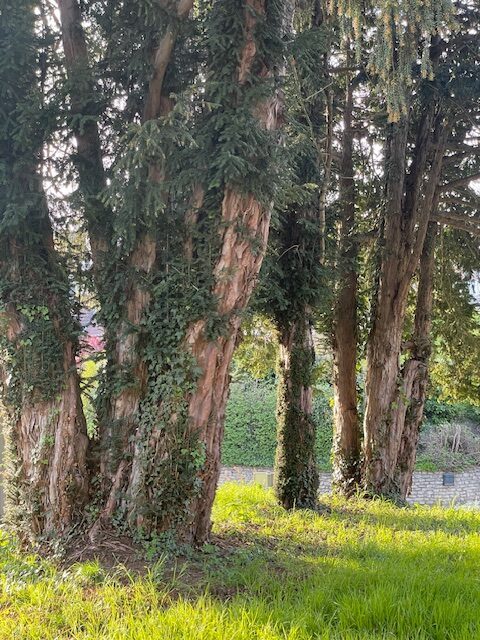
Furthermore, lower branches can droop down and, where they touch the soil, develop roots, fragmenting the tree into multiple stems. In this way, clusters or rings of yew trees are often genetically a single organism in a network of repeated selves.

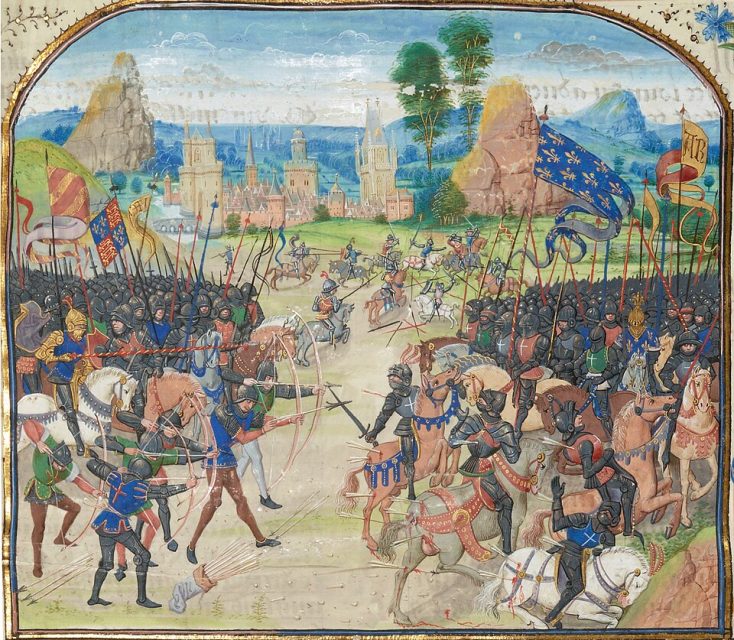
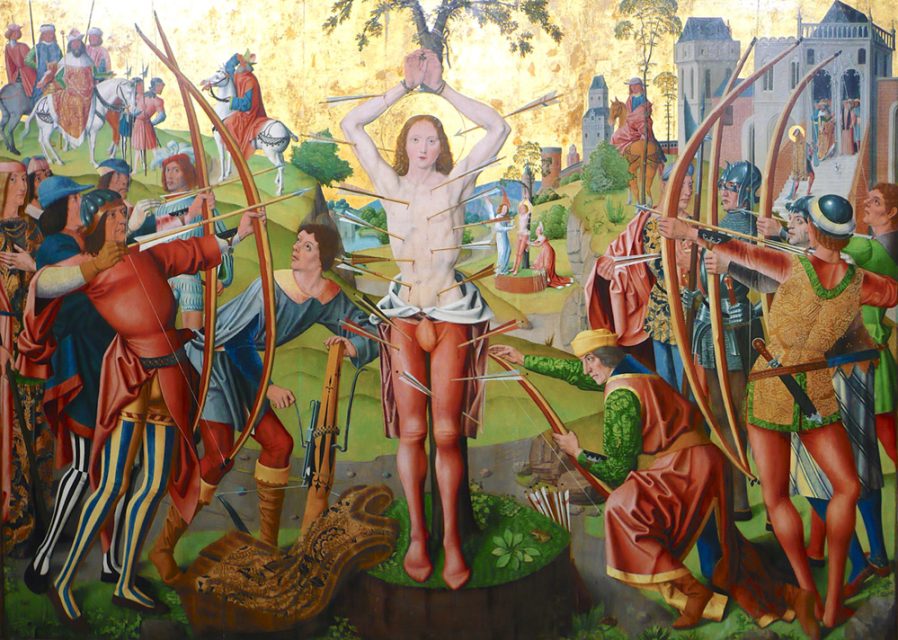
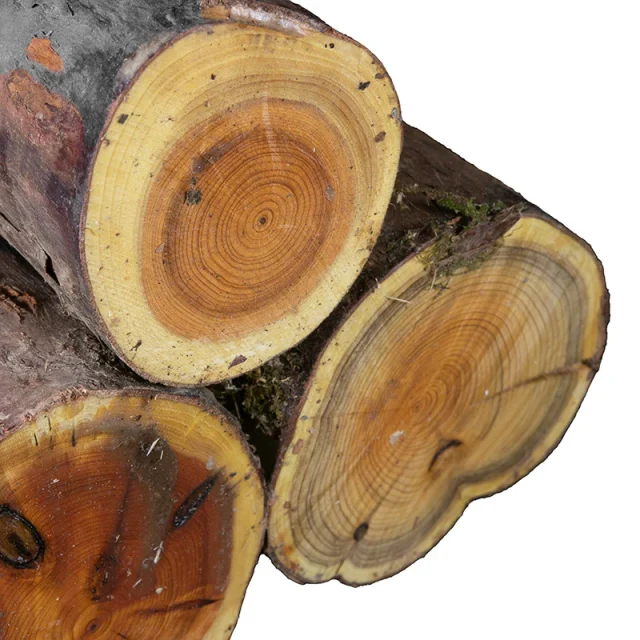
There was, however, a moment in history when yew populations were nearly depleted in parts of Europe. Their wood was used for the longbow, England’s most feared weapon. A single stave combined the hard heartwood on its inner face with the elastic sapwood on the outer, effectively building compression and tension into one single piece of timber. This gave the weapon great power, range and speed. English armies had such a massive demand for the wood that trees were felled and exported to England from all across Europe — many of them the same churchyard yews that had stood for centuries.

Today, one of the main uses for the tree is in oncology. The very compounds that make the yew so deadly are extracted as taxanes and used in chemotherapy to treat cancer.
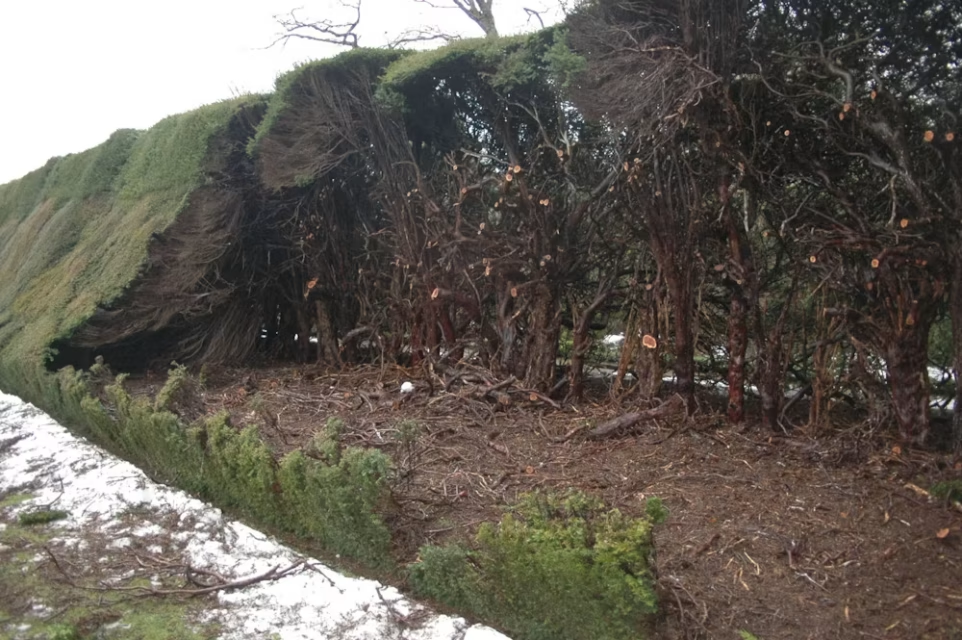
The interior and exterior of a yew hedge clearly visible.
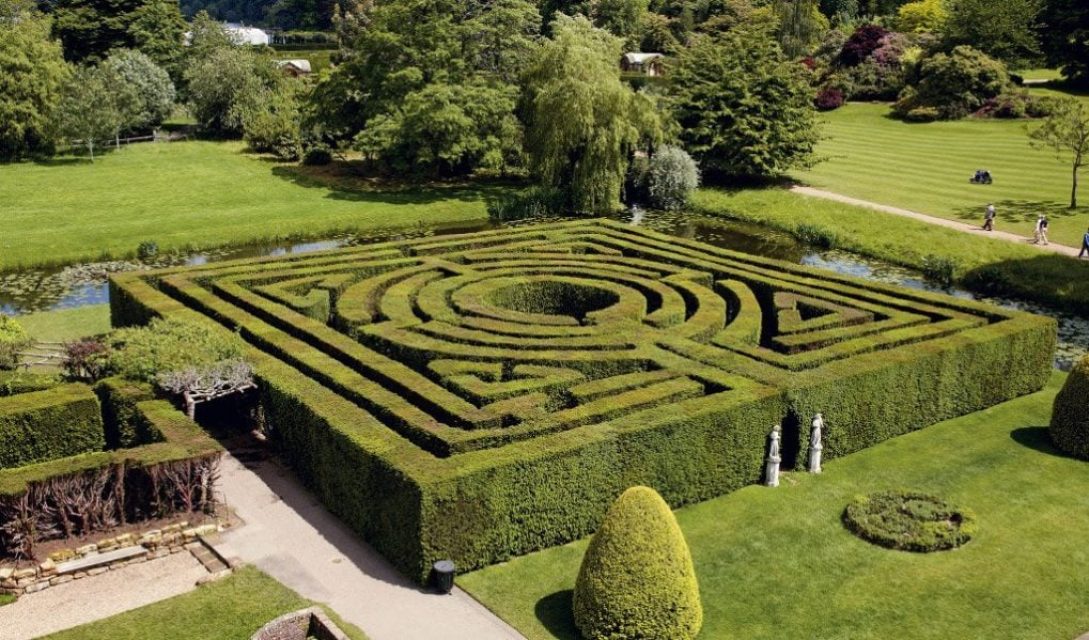
Even complex shapes such as this maze at Hever Castle can be achieved and maintained in yew.
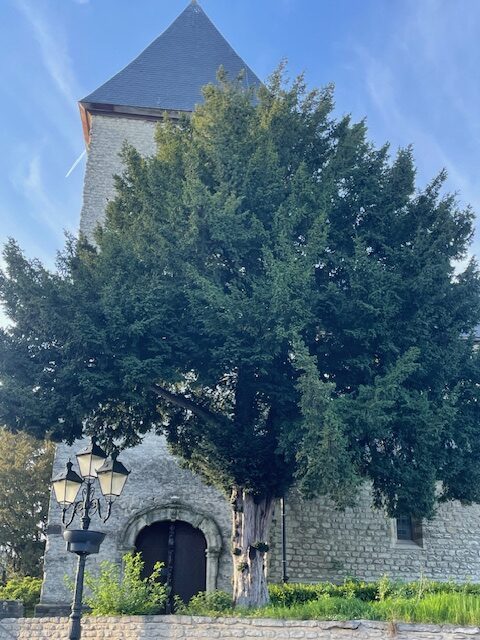
There are yew trees next to both churches in our neighbourhood.
A yew tree standing before the 12th century tower.
Closely growing yews, possibly originating from a single organism.
The ground remains largely barren where the needles fall
The ground remains largely barren where the needles fall.
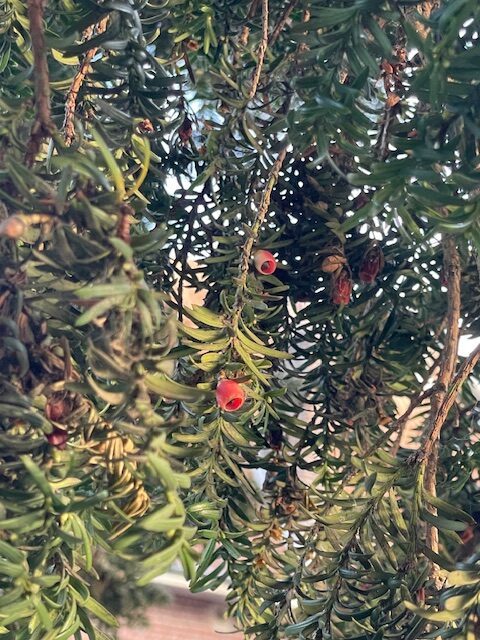
A few yew berries still hang on the tree.
As the trunk decays, new growth continues within and around it.
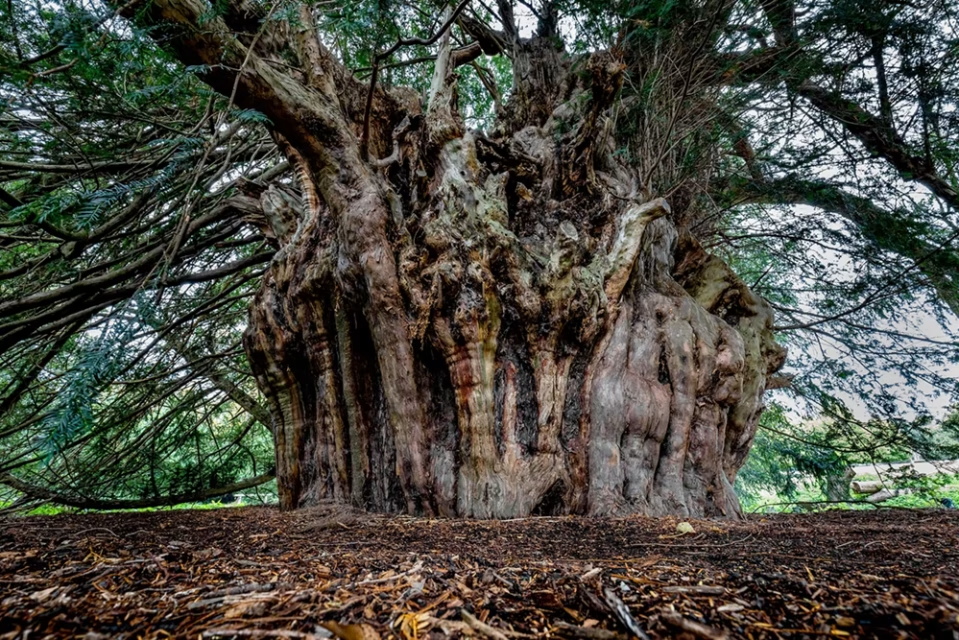
The Fortingall Yew, estimated to be between 2,000 and 3,000 years old.
The Ankerwycke Yew, over 2,000 years old, with a massive, twisted trunk.
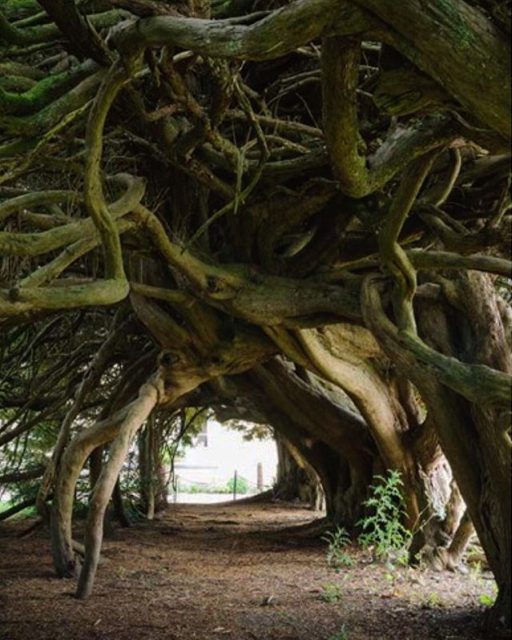
A yew tree forming an interior space through its interwoven branches.
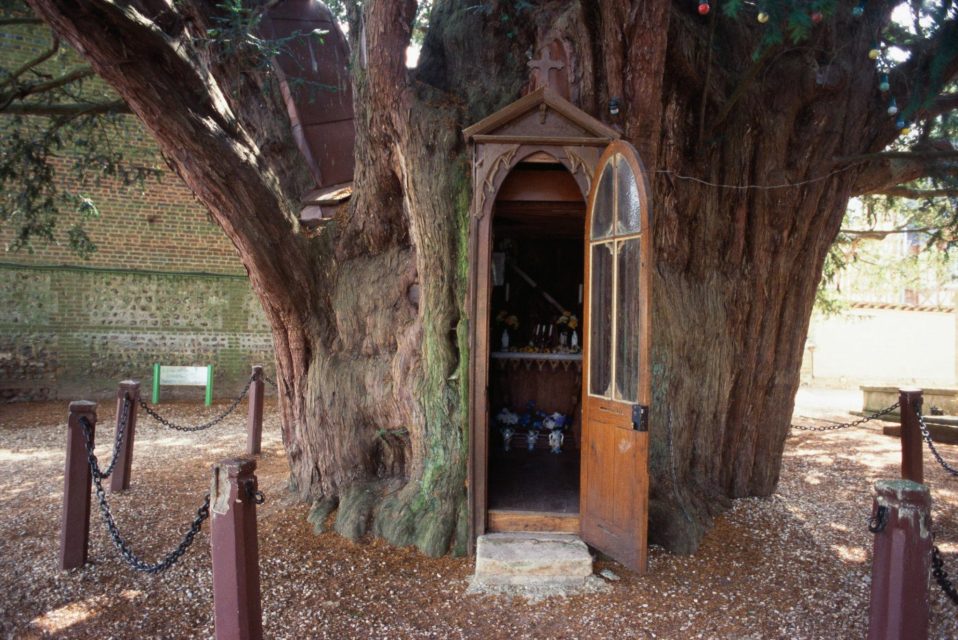
A chapel built into the hollow trunk of a yew tree in La Haye-de-Routot.
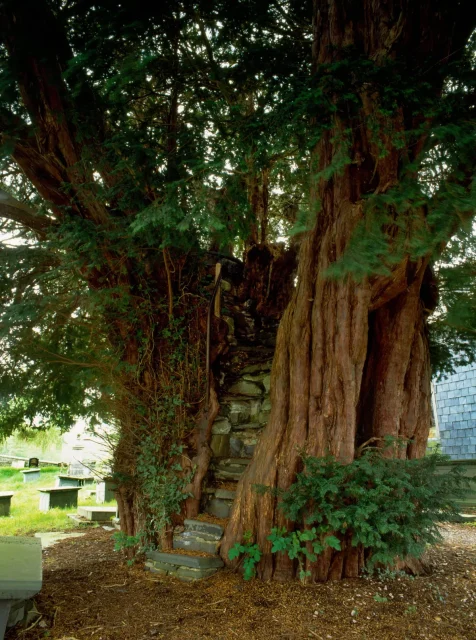
The Pulpit Yew, Wales.
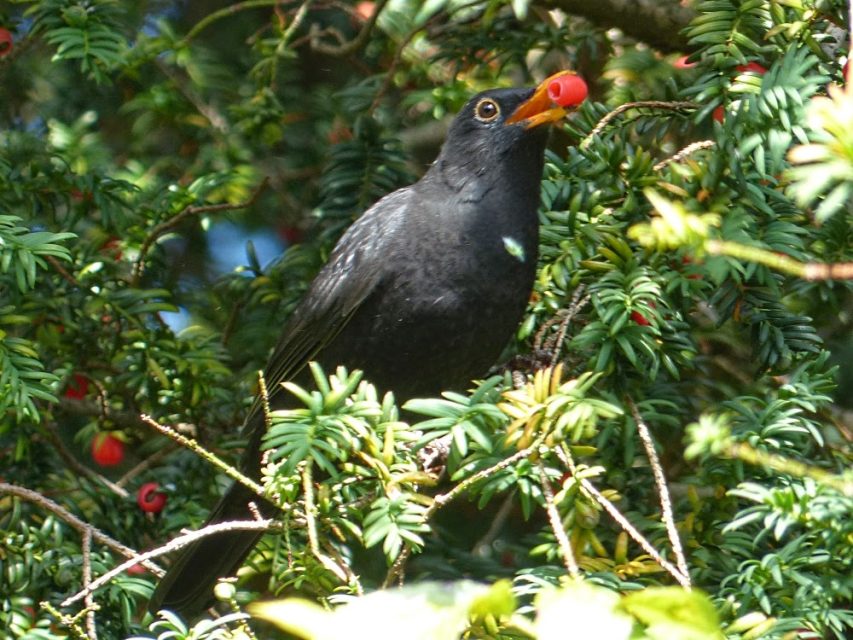
Birds can eat yew berries, as their digestion does not break down the seed.
The Battle of Poitiers (1356), English longbowmen using yew bows.
You can clearly see sapwood and heartwood in the yew bows in this Saint Sebastian altarpiece.
Yew wood showing the contrast between sapwood and heartwood. It should not be used as firewood, as its fumes are toxic.
Oil Sketch by Philipp Frohlich showing a yew hedge.
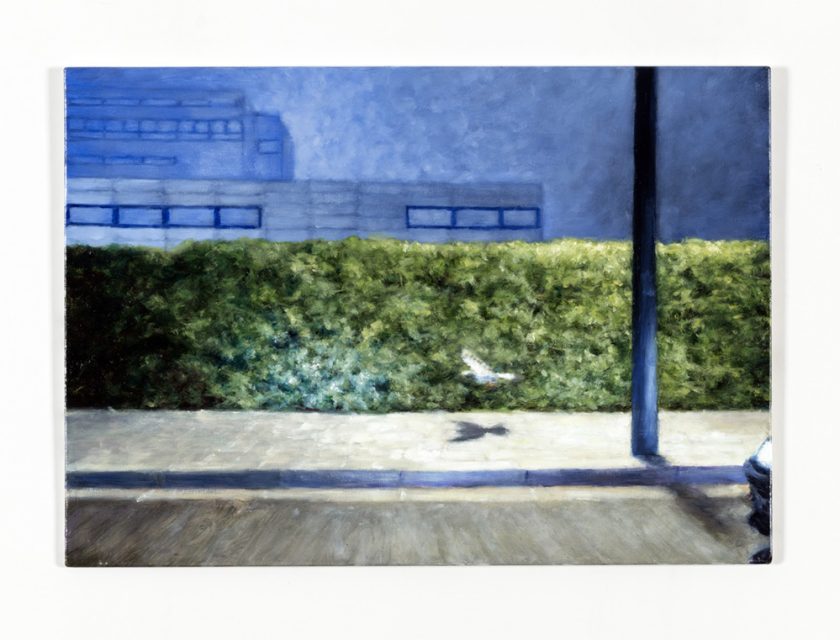
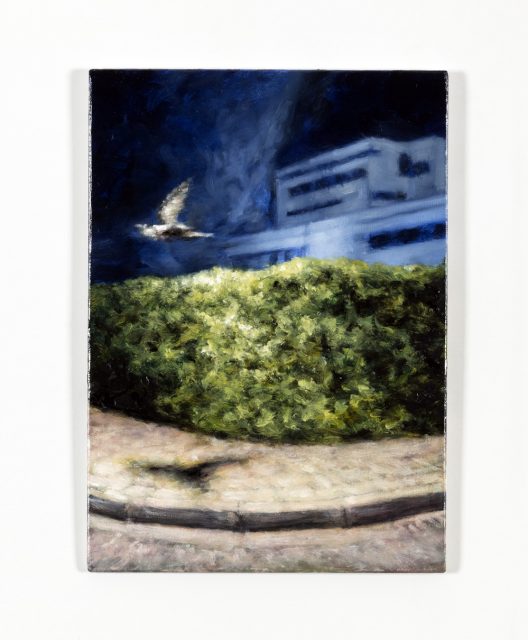
An oil sketch I painted a few years ago, based on the hedge around the school.
Another oil sketch based on the hedge.
Philipp Fröhlich, HOAP of a Tree, Juana de Aizpuru.
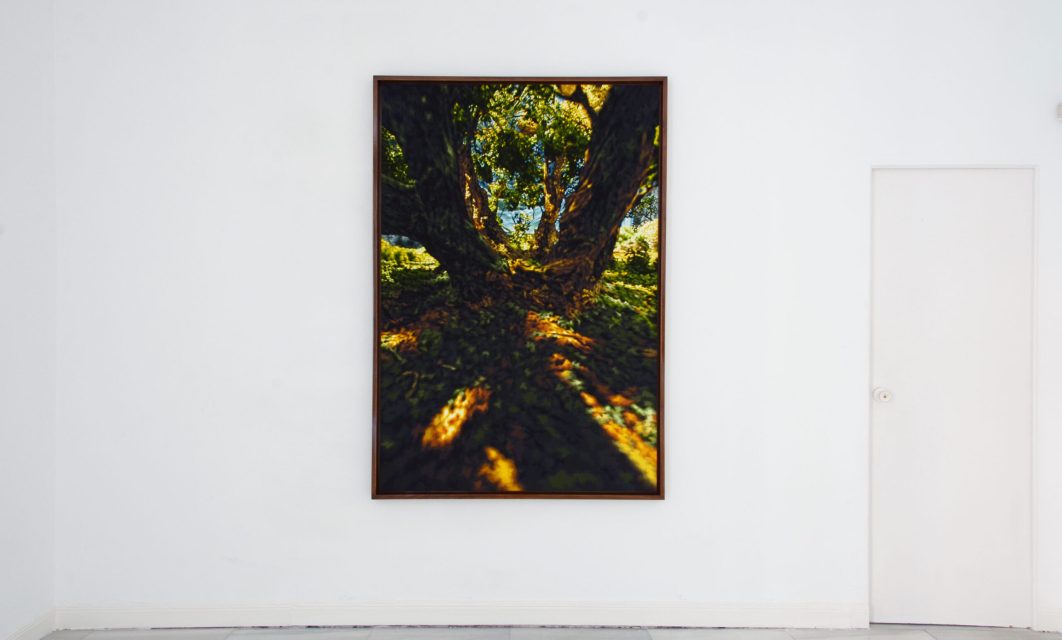
The painting shown in the exhibition HOAP of a Tree at Juana de Aizpuru, 2015.
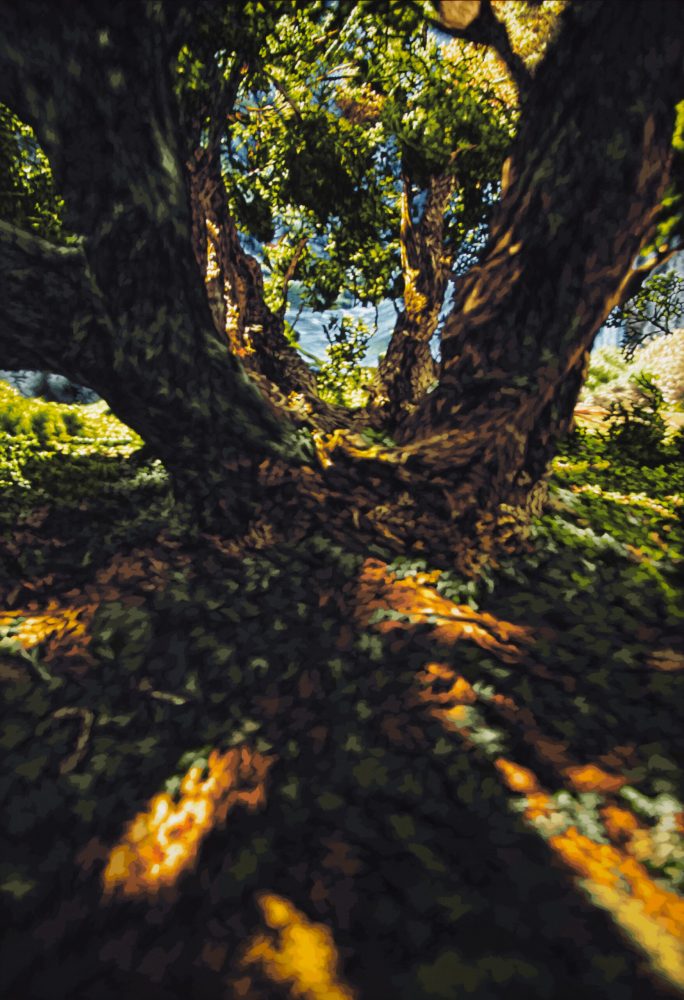
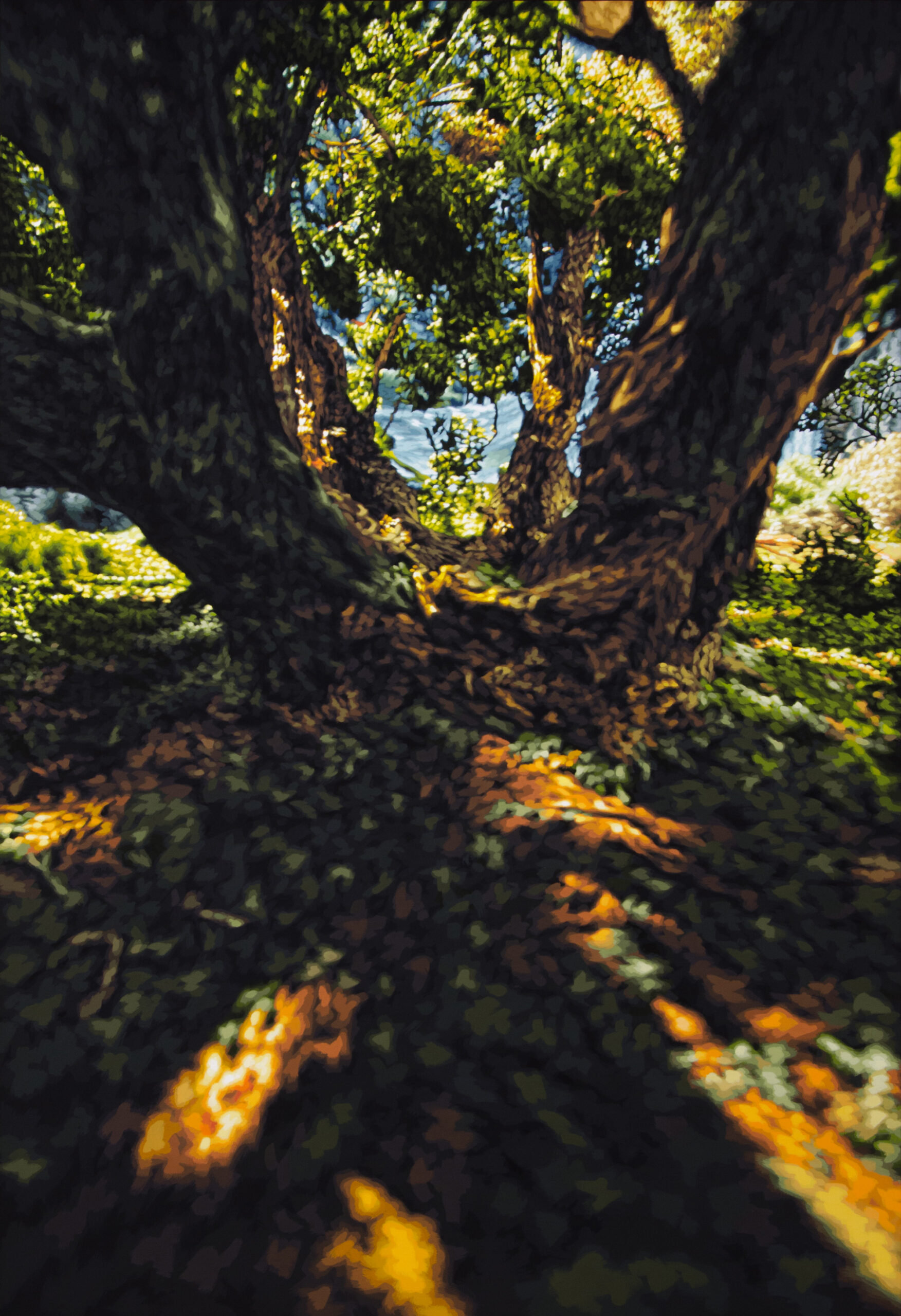
PPhilipp Fröhlich's tempera painting from 2015, showing a yew tree.
(195L), 2015, tempera on canvas, 175 x 120 cm

Sign up to receive a brief update every two weeks when a painting is added.